Fillings on Decayed Teeth

2 Comments

Fillings on Decayed Teeth

            Tooth decay (also known as caries within our profession) is a condition that affects over 90% of adults in some degree. It is the most prevalent dental condition in the United States and likewise fillings on decayed teeth are the most commonly performed procedures in most dental offices.

 Decay follows two simple equations-

Food + Bacteria + Time = Acid

Acid + Healthy Teeth + Time = Tooth Decay.

          When the decay is shallow, it sits in the top layer of the teeth, called the enamel. Once it progresses beyond the enamel, it reaches the inner layer, called the dentin. Once decay progresses into the dentin (or very deep into the enamel), it becomes problematic and must be treated.

Once the decay progresses past the enamel, it becomes problematic and possibly painful. 

            Some decay can be spotted visually or identified using a tool called an explorer. However, most decay (and the depth of ALL decay) must be identified and confirmed using dental x-rays.  Since x-rays work by showing relative densities, decay will appear as a dark (less dense) spot against light (more dense) teeth.

The top left arrow is pointing to the "shadow" left by decay on an otherwise healthy tooth. 

The top left arrow is pointing to the "shadow" left by decay on an otherwise healthy tooth. 

            Once decay is identified, it can typically be treated by performing a standard dental filling. In our office, a variety of technologies and techniques make this as quick and pain free as possible. We start by getting you numb using a syringeless anesthetic delivery system known as The Wand. From there, a combination bite block and suction called an Isolite is used to keep the area clean, dry and protected while we work in your mouth. Decay is removed quickly and completely, using a combination of electric handpieces (commonly known as “drills” although they do not perform a drilling motion), and diamond tipped burs (analogous to a “drillbit”).

            Once the tooth is “prepared” (cleared of all decay and shaped properly), we begin the actual filing process. At Thousand Oaks Family Dentistry, we utilize the most advanced composite materials for longevity, esthetics and speed of use. The composites we use match or surpass the durability of silver fillings, and thus we only place tooth colored (nonmetal) fillings.

          In fact, we use four different composite filling systems matched to one of three bonding systems in an entire spectrum of tooth colored shades to address a variety of concerns. We firmly believe that there is no one-size-fits-all approach to dentistry, and will curtail our process to each individual person.

         After the teeth are filled, we will give the tooth an anatomically correct shape using a “finishing bur.” After that, we adjust the filling using contact (biting) paper, polishing disks and polishing burs to make sure it looks and feels outstanding. Our ultimate goal with any filling is that you cannot tell where the filling stops and your natural tooth begins!

2 Comments

How to Brush Your Teeth- Ten Steps to Better Home Hygeine

Comment

How to Brush Your Teeth- Ten Steps to Better Home Hygeine


Since Childhood, you’ve heard the same old story about tooth care: brush twice a day for two minutes, floss nightly, and no food between brushing and bed. However, this isn’t the end of the story.  In today’s fast paced world, we are all looking to optimize our efforts spent on healthcare and grooming. By following these ten easy steps, you can maximize your home oral hygiene while saving time, money and headaches!


1. Brush 30 minutes before your first meal and 30 minutes after your last meal. Brushing twice a day is an important and well-known standard of home hygiene. However, the timing of brushing can also be influential on the outcome of your efforts. Brushing before breakfast helps remove the bacteria and biofilms that build up during sleep, while brushing after dinner removes any food particles that could potentially sit in your mouth all night as you rest. But why wait 30 minutes before and after? This has to do with the acidity of food and the abrasiveness of toothpaste and toothbrush bristles. Brushing directly after a meal can have the same effect as removing old paint with acetone and a wire brush. The combination of low pH and rough scrubbing can be corrosive enough to remove enamel and actually weaken tooth structure. The 30-minute period lets your saliva naturally readjust your mouth’s acidity and remineralize teeth before rigorous cleaning.


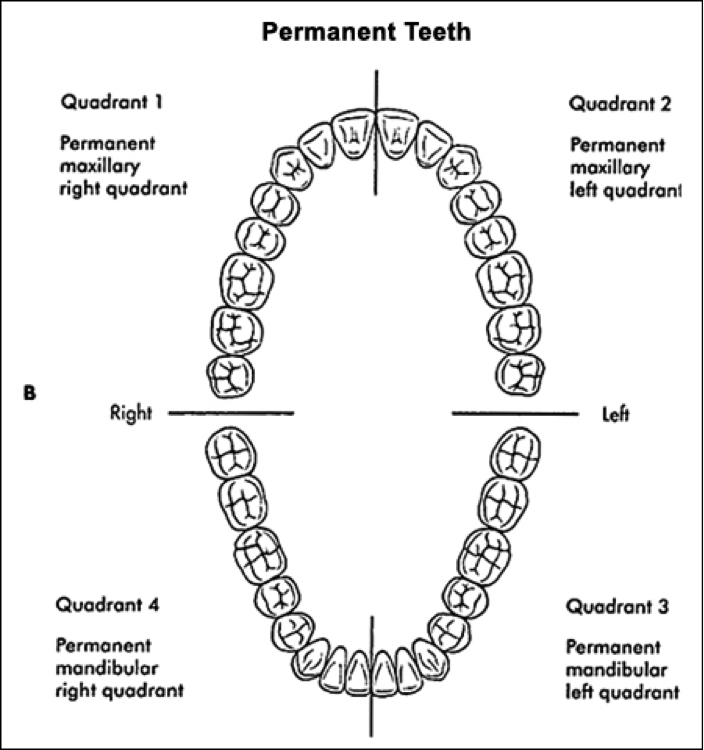
2. Instead of brushing for two minutes, brush for 30 seconds in each quadrant of the mouth. This small change in thinking makes sure that you tackle each area of the mouth with equal attention. Focusing on areas that catch food is good, but the true benefit of brushing is reached when no area of the mouth is neglected or forgotten.


The mouth can be divided into four quadrants: Upper Left, Upper Right, Lower Left and Lower Right

The mouth can be divided into four quadrants: Upper Left, Upper Right, Lower Left and Lower Right


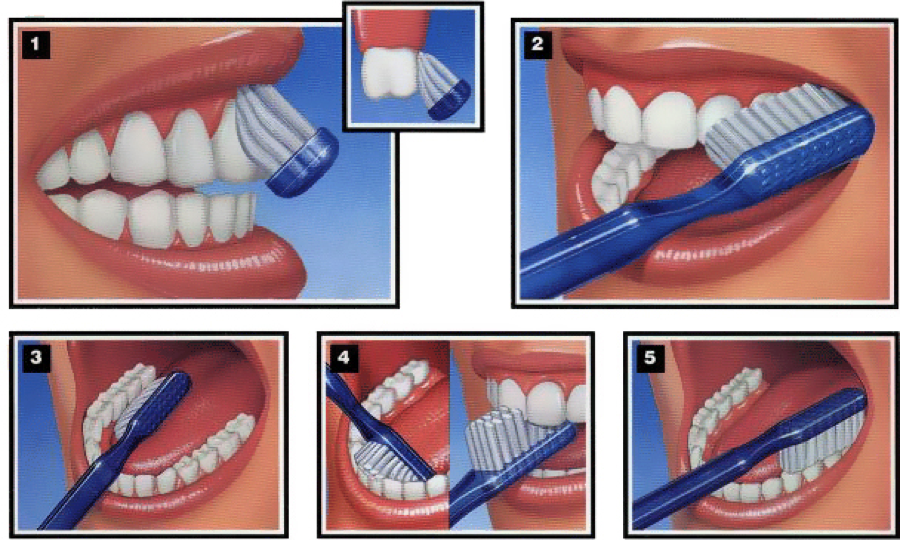
3. Reposition your toothbrush to reach your gums. Many people hold the toothbrush bristles 90 degrees to both the biting surfaces and sides of teeth. In reality, the bristles should be positioned at 45 degrees to where the teeth and gum meet for the majority of brushing. While brushing the biting surfaces of teeth is still important, the space between your teeth and gums is an often neglected hotspot of bacteria. This space, known as the gingival margin, is both difficult to reach and easy for bacteria to cause inflammation, decay and gum recession.


Hold the brush at a 45 degree angle, unless you are addressing the biting surfaces of the teeth. 

Hold the brush at a 45 degree angle, unless you are addressing the biting surfaces of the teeth. 


4. Consider switching to an electric toothbrush. Electric toothbrushes offer a wide variety of advantages over standard manual units. The added motion of mechanical or ultrasonic motors allow bristles to reach difficult areas, while built-in safety features can minimize overly aggressive brushing and abrasion. The most important features to look for in an electric brush is a small brush head (to reach your entire mouth) and built in timer (set to two minutes).


5. Bad breath? Look beyond mouthwash. Bad breath is a problem that plagues many patients. Mouthwash is often viewed as the best (and only) solution to this condition, with many patients using it multiple times throughout the day. Unfortunately, mouthwash is only as effective as long as the minty smell lasts, and the low pH of many consumer mouthwashes can lead to further tooth decay. The best way to cut back on bad smelling breath is to start flossing correctly (see below) and brushing the tongue.  Tongue brushing is done by holding your brush 90 degrees to the tongue and brushing away from the face.


6. Focus on flossing correctly. The absolute best step to boost your home hygiene routine is to start/keep flossing once a day. Using the floss to break the contact between the teeth is a good start, but the true benefit of flossing arises when you go below the gum line. This can be accomplished via the “scoop the tooth” method. Once the floss is between the teeth, use it to “scoop” around both of the touching teeth. This allows the floss to dislodge bacteria and food that live in the gingival margin between teeth. Those with braces, bridges and dental appliances should use threader floss to make sure they can reach behind wires and other structures.

How to floss: 1. pull off a forearm's length of floss. 2. put tension on the floss. 3. Break the contact between the teeth. 4. floss between the teeth, between the back tooth and gums and between the front tooth and the gums. Flex the floss with the…

How to floss: 1. pull off a forearm's length of floss. 2. put tension on the floss. 3. Break the contact between the teeth. 4. floss between the teeth, between the back tooth and gums and between the front tooth and the gums. Flex the floss with the tooth to "scoop the tooth."


7. Follow up meals with a water rinse and xylitol product. While you might feel the strong urge to brush following a meal or snack, you are better off waiting until your mouth remineralizes before taking a brush to them. The best way to dislodge food particles, avoid staining and prevent decay after meals is to rinse with water and chew gum/mints containing xylitol. Xylitol is a plant based sweetener that interrupts bacteria’s’ ability to make tooth destroying acid. It is completely natural (our bodies make a small amount every day) and is an ingredient used in most sugar free gums.


8.  Keep snacking to a minimum. Any time a food product or drink is consumed, our mouth pH turns acidic for about 30 minutes. This happens with almost every type of food, no matter how much (or little) you are eating. Over time, this acidic environment can weaken tooth structure and lead to rampant decay. Hence, snacking, or frequent eating, can be as damaging to a mouth as a sugary, carbohydrate heavy diet. For example, eating a small dessert after both lunch and dinner only leads to two exposures of 30 minutes of acidity. However, eating five baby carrots once an hour for an eight-hour workday would lead to 4 hours of acidity. Yikes!


9. Get Fluoride exposure. Fluoride is a safe and highly effective way to effortlessly boost your oral health. Fluoride works by allowing the calcium-phosphate found in our diets to reenter the tooth structure and remineralize enamel. In addition to being found in most commercially available toothpastes, the Southern California water supply has been fluoridated for many years. Drinking tap water or most filtered waters will give you a preventative dose of fluoride.


10. Report changes in oral health/eating habits/lifestyle at your cleanings. Dental cleaning and home care are no longer addressed in a “one size fits all” approach. Letting our staff know about changes in your diet, medications or lifestyle can allow them to suggest changes to your routine or new supplements to better aid in home care. Remember, we are always here to help you reach a beautiful and healthy smile! 

Comment

Dental Cleanings and Exams

Comment

Dental Cleanings and Exams


Cleanings and Exams

At Thousand Oaks Family Dentistry, we feel that routine cleanings and dental exams are the cornerstone of modern preventative dentistry. On top of monitoring the progress of our patients’ oral health, these appointments allow us to better understand and address each individual’s unique needs.

In our office, teeth are only the beginning of what we screen during a routine check up. Through a combination of new technology and proven techniques, our patients are assessed for many conditions, including oral cancers, TMJ disorders and sleep apnea. Our end goal with every visit is to address every single one of your oral concerns and design a game plan towards your optimal health!

Our main focus is finding the intersection of accuracy, safety and patient comfort during all dental procedures. During cleanings and exams, this is achieved through a number of modern techniques:

X-rays.jpg


Digital Xrays- These state of the art sensors utilize high sensitivity to provide us the clearest pictures with the absolute lowest levels of radiation exposure possible.

scaler.jpg


Ultrasonic Scalers- Many patients find the motions and sounds of scaling (removing) plaque by hand to be uncomfortable. To counteract this, each of our dental chairs is equipped with ultrasonic scalers, which utilize high frequency vibrations and water to effortlessly remove any buildup on the teeth.

screenings.png


Physical screenings and questionnaires- By assessing your diet, sleeping habits and medical history, we can pinpoint certain oral conditions and risks before even looking in your mouth! Our techniques are backed by academic research and years of scientific advancements. Furthermore, visual inspections and palpitations can help us predict the onset of TMJ disorders and oral cancer.

officeshot


Outstanding Hospitality- We know that dental cleanings only work if our patients attend their appointments! Your cleaning and exam should be an enjoyable and educational experience, not something you dread. To ensure this, our office provides a number of services to make your feel at home. Each operatory is equipped with its own TV screen (Cable, Netflix, Pandora), we have blankets and pillows upon request and we have hot towels to make sure you feel fresh leaving our office. If you ever need anything at all, please let us know!

Comment

Dental Implants Thousand Oaks

Comment

Dental Implants Thousand Oaks

Lost teeth can be replaced by a number of different dental treatments, including implants, removable dentures, and bridges.  Implants are the most technologically advanced treatment option and act the most like natural teeth.  Dental implants are bio-compatible titanium alloy cylinders that act as a root replacement for a missing tooth.   In their current form, dental implants have been around since the late 1970s when a Swedish orthopedist named Dr. Branemark developed them for dentistry. 

Today dental implants are the preferred course of treatment for replacing a single missing tooth.  They are similar in cost to doing a bridge and far more comfortable than wearing a removable appliance such as a partial denture.  In addition, unlike a bridge, dental implants do not require disturbing the tooth structure of surrounding teeth. 

According to the Academy of Osseointegration website, the long term success rate of implants remaining stabile in the bone is 90%.  A study published in Clinical Oral Implants Research (July 2010) showed a 16 year survival rate of 83%.  In either case, implants have an amazing long term success rate, that makes them a predictable option to replace a missing tooth. 

Implants have become a billion dollar industry.  Two of the leading implant manufacturers, Nobel Biocare and Straumann each reported yearly revenue in 2013 and 2012 respectively of over 780 million US dollars.  In my office I have been placing dental implants since 2007.  I have chosen to place Straumann implants, because they are an industry leading company that has been developing implants in Switzerland since 1974.  They produce a high quality and consistent product, including the implant and all of the parts that connect to the implant that allow us to restore the implant with a prosthetic tooth. 

As a general dentist, I enjoy placing implants in my office because I know where the ideal placement is so that I can restore the implant with an ideally fitting and functioning crown.  The actual surgery of placing the implant isn’t much different than drilling an ideal hole in a tooth to fix a cavity.  Implants are placed by surgically making a small incision in the tissue, followed by drilling a hole similar in size to the implant, and then using a torque wrench to screw the implant in place.  The entire procedure is done with local anesthesia in under an hour.  Patients have told me that having an implant placed is less traumatic than having a tooth removed, and the recovery isn’t much different than having a filling placed. 

After a tooth is lost, it is ideal to wait four months for the bone to heal before placing the implant.  It takes an additional four months once an implant is placed for it to osseointegrate in the bone and for the permanent crown to be placed.  So from the initial tooth loss it takes eight months for the procedure to be completed.

In restoring the implant, there are a couple of steps.  We take an impression of the location of the implant.  Then my lab fabricates a custom abutment, which replicates the missing part of the tooth that sticks above the gum tissue.  These abutments are made of either a high noble metal, titanium or zirconia and they are screwed onto the implant.  Finally a traditional crown is made to attach to the abutment.

Patients frequently ask about the cost and timeline for dental implants.  To restore a single missing tooth with a dental implant, abutment, and crown, the cost is approximately $3500.  Implants are most predictable in their long term success when they are given the proper amount of time for the bone to integrate and heal to the implant.  When advertisements are made for implants that cost less or take less time, it generally involves using less quality implants and connecting parts.  I believe in using industry leading parts, custom abutments, and quality local labs to complete all of my implant cases.

dental implants thousand oaks

Kari Ann Hong, DDS
1000 Newbury Rd. #190
Thousand Oaks, CA 91320
www.thousandoaksfamilydentistry.com


Comment

Fillings on a six year old

Comment

Fillings on a six year old

When children get cavities they are quicker to appear and faster in their progression than cavities on an adult. Mostly this has to do with the anatomy of a baby tooth versus a permanent tooth. I recommend that children start seeing the dentist at age one and then every six months thereafter. It is much easier to fill a small cavity then to deal with a large hole on a tooth.

Yesterday I had the pleasure of seeing a six year old girl that had a hole in-between two of her baby teeth. I had seen her last week to attempt to fix the hole, but it was a no go. Yesterday I was successful in filling the cavity and it brought to mind some important points on treating children: parent selection, timing, patience, and choices.

Parent selection is a key factor. As parents we bring our own anxieties with us to the dental office and we are experts at transferring these anxieties to our children. In the case of my six year old patient, it was her father that had brought her the week prior. The dad has a severe gag reflex and previous traumatic dental experiences. While he was being supportive of getting the cavity fixed, there was an aura of "is this going to hurt my daughter?" in the room. The mom was much more relaxed and matter of fact. From the onset of the appointment yesterday the mom's attitude was that we were going to get the cavity filled.

Timing when treating children makes a huge difference. If your kid is cranky or tired at certain times of day, then that is a bad time to be doing dentistry. For instance, my four year old is exhausted by 3 or 4 in the afternoon. He is much harder to reason with at that time of day. Early in the morning my son has boundless energy and he has a hard time sitting still. The best time to treat most kids is mid morning or after lunch. Also, it is important to keep in mind that when you are numb it is hard to eat and kids are more likely to bite their cheeks when numb. Thus, is important that your child is well fed before having a cavity filled.

Patience is the answer to finishing all types of dental treatment. It is important to take the time to walk a child through the steps of the procedure. In addition it is necessary to wait for them to overcome the crying that comes with anxiety of not knowing what is going to happen next. At the beginning of the appointment, my six year old patient was crying and refused to open her mouth. Once she realized that her tooth was going to get filled no matter what and I fully explained each step, she stopped crying and opened her mouth.

Choices are a funny thing when it comes to kids. The appointment with the six year old went something like this, "we can use this white and pink Mr. Thirsty or this clear Mr. Thirsty.". The point being that one way or another I needed suction while cleaning out the sugar bugs. Then I used a blue liquid, followed by a glue that was hardened by a blue light saver light and topped off with a white liquid that filled the hole. Success!


Kari Ann Hong, DDS1000 Newbury Rd. #190Thousand Oaks, CA 91320www.thousandoaksfamilydentistry.com

Comment

Sleep Apnea and Dentistry

Comment

Sleep Apnea and Dentistry

Did you know that if you have sleep apnea that it can shorten your lifespan by 7 to 8 years? Did you know that having sleep apnea puts you at greater risk for stroke or heart attack?

Obstructive sleep apnea is defined as someone that stops breathing while sleeping. Sometimes this can be accompanied by loud snoring. The cessation of breathing is caused by muscles in the throat area relaxing and the tongue falling back in the throat, blocking the airway. The severity of sleep apnea is defined by the number of times per hour someone stops breathing in their sleep. Someone with severe sleep apnea stops breathing more than 25 times per hour while they are sleeping. The body subconsciously wakes up when it realizes it isn't breathing, leaving the person to wake up the next morning feeling unrefreshed.

My dad has sleep apnea. In his quest to treat his own condition he took a continuing education class on treating sleep apnea with dental appliances. After taking the class, he decided to invest in an airway evaluation device as well some take home sleep monitors. In the past couple of months he has successfully treated a number of mild to moderate sleep apnea patients with dental appliances. (If someone is found to have severe sleep apnea, then a continuous positive airway pressure machine is recommended.)

As a part of our sleep apnea screening we ask the following questions:

1. Are you likely to fall asleep or doze off if you are:
a. Sitting and reading
b. Sitting in a public place
c. Driving a car stopped for a few minutes in traffic
d. Sitting down quietly after lunch without alcohol
e. Watching TV
f. As a passenger in a car for one hour
g. Sitting and talking to someone
h. Lying down to rest in the afternoon
2. Have you gained 15 pounds or more in the last six months?
3. Have you ever been told that you snore?
4. Does your snoring occur almost every night?
5. Would you or someone hearing you sleep consider your snoring louder than a person talking?

If you answer yes to two or more of the above questions, then you could be at risk for sleep apnea and an evaluation of your airway opening would be a good idea.


Kari Ann Hong, DDS
1000 Newbury Rd. #190
Thousand Oaks, CA 91320
www.thousandoaksfamilydentistry.com

Comment

Cavity prevention with mouthwash

1 Comment

Cavity prevention with mouthwash

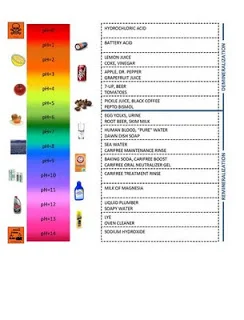
I pulled this pH scale image from the CariFree website. What is CariFree? CariFree is an entire product line of mouthwashes, toothpastes, gum, and mouth sprays that were developed to have basic pH content, xylitol, and fluoride. The most impressive part of their product line is the mouthwashes. They have a CariFree treatment rinse and a CariFree maintenance rinse. What sets apart the CariFree rinses from others on the market is that they are basic in their pH. The CariFree system of products is a relatively new product line and something that I have only had in my office since May of this year.

I have a patient that has recently been struggling with dry mouth and tooth decay. We set up an appointment so we could further discuss treatment options for prevention of future tooth decay. My patient took it upon himself to bring in some pH strips and the Biotene and ACT brands of mouthwashes to his appointment. I was surprised to find out that the Biotene rinse was a 4.5 pH which is quite acidic. The ACT brand was neutral at 7.0 pH.

It is scary that a rinse like Biotene which is marketed to dentists as a treatment for dry mouth, could actually be causing more harm due to its acidic content. It would be like rinsing your mouth with 7-UP soda. There are many other mouthwashes out there that contain alchohol which apparently is meant to kill bacteria, but it leaves the mouth dry which ultimately encourages bacterial growth.

Since we started distributing the CariFree rinse in May, I have had a number of patients use the rinses. The most common testimonial I hear is that it helps with dry mouth and it makes the teeth feel cleaner.

My recommendation to my patients is that if you are going to use an over the counter rinse, the ACT rinse is your best bet. It has fluoride and it is at least neutral in its pH. If you want a rinse that will help neutralize the mouth and stop de-mineralizing your teeth, then I recommend taking a look at the

CariFree product line.

Kari Ann Hong, DDS1000 Newbury Rd. #190Thousand Oaks, CA 91320www.thousandoaksfamilydentistry.com

1 Comment

Another Cavity?

Comment

Another Cavity?

There are three groups of people that tend to get new cavities on a routine basis. The first group are children under 10, the second group is teenagers, and the last group is mature adults (the 60 and over crowd). My least favorite thing to do in my office is to inform someone that they have another cavity.

On a routine basis now I am asking a couple of key questions as part of my patient health history review. The purpose of the questions is to initiate a dialog as to what causes tooth decay and how to prevent it from happening in the first place.

The risk assessment for cavities includes the following: Acidic beverages, frequent snacking, inadequate salivary flow, appliances present, deep pits and fissures, hyposalivary medications, visible plaque, cavity in the last three years, visible cavitations and radiographic lesions.

Basically in order to get a cavity, something acidic sits next to the tooth structure and eats away at the tooth structure to form a hole in the tooth. What we eat and drink and how often we eat and drink it plays a large role in how much acidity is in our mouth. Anything other than water such as: soda, juice, energy drinks, vitamin waters, and carbonated beverages are acidic. Anything dry, pasty or sugary contributes to the food particles staying in the mouth for a longer period of time. The solution when it comes to tooth decay, is to limit food consumption to meal time and only drink water outside of meal times.

Braces, inadequate salivary flow, deep pits and grooves on the teeth, and lots of plaque on the teeth are all things that contribute to the acidity having an easier time to stay next to the teeth for a longer period of time. I recommend an electric tooth brush for all of my patients, as well as a daily flossing routine in order to maximize the cleanliness of the teeth.

A cavity in the last three years, visible cavitations, and radiographic lesions are important because it means that the cavities are significant enough that they must be removed and filled by the dentist. Even though a tooth has had a filling or a crown, it can still get new tooth decay in the future. Basically any part of exposed tooth structure is susceptible to tooth decay.

Wonder why the three age groups I mentioned at the beginning tend to get the most new cavities? The under age 10 group is at risk because of drinking milk right before bedtime or other non-water beverages throughout the day, eating sugary snacks and candies like gummies or fruit rolls, and not being able to effectively brush or floss their own teeth. The teenager crowd is at risk because of braces, consuming large amounts of alcohol and not brushing before bedtime, and snacking or drinking awakening beverages while studying. The mature adult is at risk because of the medications that they take that changes their body chemistry and dries out the mouth.


Kari Ann Hong, DDS
1000 Newbury Rd. #190
Thousand Oaks, CA 91320
www.thousandoaksfamilydentistry.com

Comment

New Website

Comment

New Website

We are launching our new website design this week for Thousand Oaks Family Dentistry. The new site will feature patient reviews, commonly asked questions, services we provide, online appointment requests, and a video of our practice. I am excited about our latest improvements to our internet presence. I think the website gives a great snapshot of my office.


My goal in patient care is to provide personalized, individual care to each of my patients. Also, I believe in respecting people's time, so I don't double book and I do my best to run on time all day. I make treatment recommendations based on a comprehensive approach to patient care. I want all of my patients to be able to achieve optimal dental health.

Take a look at my new website and let me know what you think!


drhong@thousandoaksfamilydentistry.com


Kari Ann Hong, DDS
1000 Newbury Rd. #190
Thousand Oaks, CA 91320
www.thousandoaksfamilydentistry.com

Comment

Baby Teeth

1 Comment

Baby Teeth

With two young kids, I have baby teeth on my mind. Children usually get twenty teeth by the age of two, ten on top and ten on bottom. The first baby teeth a child gets are the lower two central incisors. The first adult teeth a child gets are the lower first molars and they come in behind the baby teeth. The first teeth a child looses are the lower incisors and that usually happens after adult molars erupt.

As a mom I worry that my kids will end up with poor skeletal/tooth/facial development and that they will get cavities. Prevention is always the best medicine in dentistry. It is always easier to stop something from happening then to fix it once it has happened. When it comes to facial development, the biggest problems are bottles, pacifiers, and thumb sucking. Any of these things by themselves can cause a significant overjet of the upper teeth over the lower teeth. I recommend stopping bottle and pacifier use by age one. Thumb sucking is the most difficult thing to prevent because as a parent you can't take that away. If a child hasn't stopped sucking their thumb by age 4 or 5, then there is a dental appliance that can be placed to prevent the thumb from sitting comfortably in the mouth.

The easiest way to prevent cavities in children is to watch what they are eating and drinking. It is important to limit milk and juice consumption to meal times. I recommend never purchasing soda for daily consumption. Foods that are sticky in consistency like gummy fruits or candies should be avoided at snack time, because chances are that sugar will stay adhered to the teeth until they are brushed next.

Kids are difficult and frequently have minds of their own where they don't want to do what we want. Fortunately, I have made it past the bottle/pacifier/thumb sucking stage with my own children. It is a constant struggle to make sure they are well fed and that I am keeping their teeth clean.

Kari Ann Hong, DDS
1000 Newbury Road, Suite 190
Thousand Oaks, CA 91320
www.familycaredentists.com

1 Comment