Cosmetic Bonding

1 Comment

Cosmetic Bonding

Often times, patients will be very satisfied with their oral esthetics aside from one feature. Thier teeth can be straight, white and well spaced, saving for a single tooth. In these cases, orthodontics may be impossible or unnecessary for purely esthetic results. Here, cosmetic bonding proves to be the most predictable and reliable treatment to a perfect smile.

In this case, bonding was added to compensate for a short lateral incisor (left of center).

In this case, bonding was added to compensate for a short lateral incisor (left of center).


Cosmetic bonding is one of the most underappreciated cosmetic procedures offered in dental offices. Using the same tooth colored material as fillings, we rebuild and recontour teeth to better fit and fill out your smile. This material is extremely durable, and can be used to lengthen, widen or "even out" the appearance of your front teeth. Our patients are always satisfied with the results, as the transition from natural tooth to filling material is virtually undetectable.
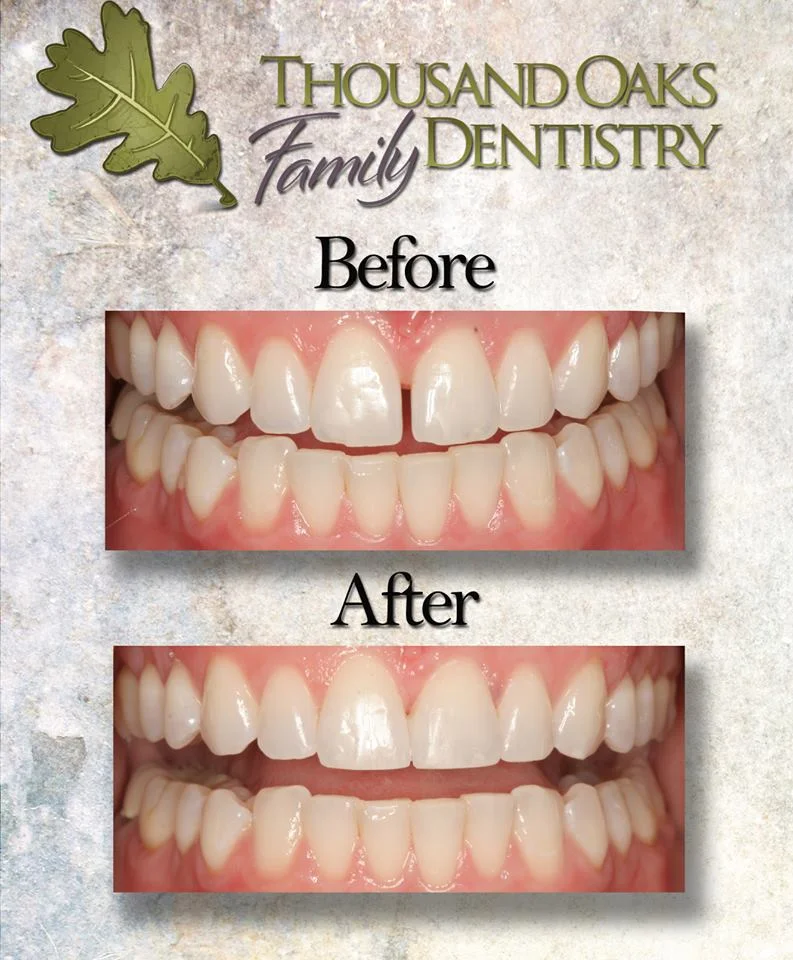

Here, bonding was used to close the gap between the patient's two front teeth.

Here, bonding was used to close the gap between the patient's two front teeth.

Your appointment will begin with a short consultation on esthetics and a few photographs. We strive to match your expectations and desires before we start working in your mouth. Once a decision has been made on how and where to add bonding, we use high pressure air abrasion to temporarily roughen the tooth surface. This step is comparable to rubbing wood with coarse sandpaper before painting. After the tooth surface is prepared to accept composite, we add our bonding agents to the indicated area, followed by the tooth colored composite. Our composites come in a variety of shades and color, and can match practically any tooth shade. The material is added slowly, contoured to your tooth, and set solid via a high intensity curing light.


After we select an appropriate tooth color and light cure it, we begin shaping the material to resemble a completely natural tooth. The refinement process utilizes  sanding discs, polishing points and a number of sensitive techniques. The results look and feel completely natural in your mouth.


However, there are limitations to cosmetic bonding. It can generally compensate for deficiencies in tooth structure, but cannot address size issues such as overcrowding. Additionally, once structure has to be built out over 3-4mm, bonding becomes a less reliable long term cosmetic solution. For these in-depth cases, we typically recommend more involved esthetic procedures. Finally, bonding can interfere with teeth whitening or whitening results. Since bonding material does not respond to hydrogen peroxide, it does not change shade proportional to your natural teeth. Hence, we recommend you complete a bleach treatment prior to performing esthetic bonding.


Many consider veneers, orthodontics and whitening  as the standard of dental esthetics. However, we urge you to consider bonding to address your mild to moderate cosmetic dental concerns. The minimally invasive nature of these procedures makes them convenient and accessible to many patients. Feel free to call our office with any questions or concerns you have about the process, materials or results behind cosmetic bonding.

1 Comment

Athletic Mouthguards

Comment

Athletic Mouthguards

Almost every physical activity carries some risk of harm or injury to your person. Bikes crash, lacrosse sticks get launched and soccerballs never go exactly where intended. We often take precaution against these injuries with helmets, kneepads and special footwear. However, we rarely consider the potential for tooth injury- unless a coach or league mandates mouthguard use.

In reality, there are a number of ways in which your teeth can be damaged during any activity. Many of these injuries can be minimized or prevented by using a custom fitted mouthguard.  These soft appliances help redistribute forces and protect the teeth from blunt trauma during athletic events.

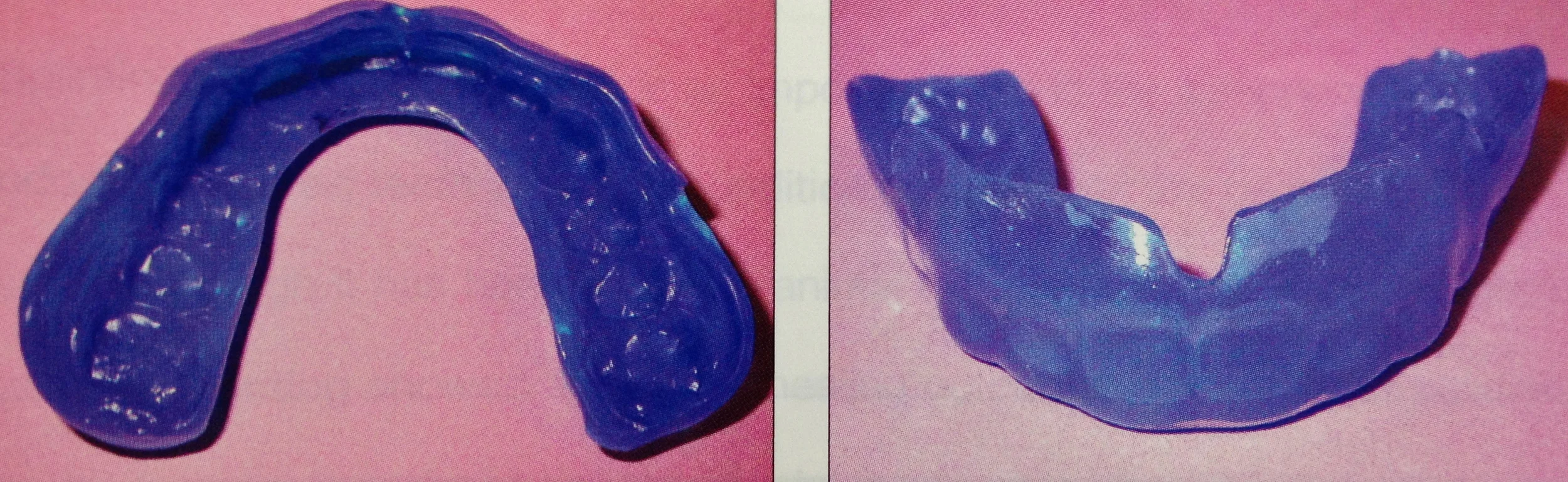
A finished mouthguard. Notice how the material sits flush against the gums for extra support. Your personal appliance can be adjusted and contoured entirely to your liking. 

A finished mouthguard. Notice how the material sits flush against the gums for extra support. Your personal appliance can be adjusted and contoured entirely to your liking. 

Who could benefit from using a mouthguard? A general rule of thumb is any sport or activity where you would wear protective padding (Such as a helmet) will present a risk of tooth injury. Studies show that athletes have 10% risk of sustaining an orofacial injury every year, with a total risk of injury of about 30%-50% over a lifetime. Furthermore, mouthguards protect beyond tooth injuries. Lip lacerations, TMJ trauma and tongue injuries can also prevented be via sports mouthguards. Some studies suggest that mouthguards could be protective against certain types of traumatic brain injuries as well. Additionally, many athletes feel that mouthguards allow them to feel more balanced and focused by providing a flat and even surface rest and concentrate on. 

The mouthguards we make at our office take your entire mouth anatomy into consideration. We use stone models and vacuum packing to form them not only to your teeth but up flush against your gums as well. This process eliminates the loose and flimsy feeling that comes with many “heat and bite” style mouthguards. The plastic is contoured and smoothed so that it feels natural in your mouth without losing any protective ability. The bottom side is layered with two types of protective acrylic, so that clamping injuries (such as an elbow to the lower chin) are counteracted by evenly distributed forces. The whole process only takes two appointments, firstly to take the initial impressions and a follow up to deliver and adjust the appliance.

At Thousand Oaks Family Dentistry, we want patients to be as educated and safe as possible in their daily activities and hobbies. Even if you are comfortable with your current mouthguard or not interested in having one made, please call our office if you have any questions about oral injuries. We feel that many types of trauma are preventable via education and want to be available to answer any questions you may have!


Additional Reading:

Types of Dental Trauma:

http://www.dentaltraumaguide.org/

Sports Related Dental Injuries: http://www.dentalcare.com/en-US/dental-education/continuing-education/ce127/ce127.aspx?ModuleName=coursecontent&PartID=1&SectionID=-1

Custom Mouthguards and Traumatic Brain Injuries:

http://www.traumaticbraininjury.net/custom-made-mouthguards-may-help-prevent-sports-related-brain-injuries/

ADA article on Sports Mouthguards:

http://www.ada.org/en/press-room/news-releases/2013-archive/april/play-it-safe-prevent-facial-injuries-with-simple-s


Comment

CDA Southern California Dental Convention 2014

Comment

CDA Southern California Dental Convention 2014

http://www.thousandoaksfamilydentistry.com/blog/2014/5/15/cda-southern-california-dental-convention-2014#.U3WCAjm60yE

Each year, California Dental Association (CDA) puts on a giant general dental convention with exhibitors, educators and classes. It is absolutely massive, with representatives from every oral health company and organization in existence. This year, Dr. Kari, Michael, Adrienne, Lori and Dean hit the road bright and early and had a blast at Anaheim Convention Center. Their extremely productive day was rewarded with some great Dim Sum in Chinatown!

Comment

Removal of Amalgam Fillings

Comment

Removal of Amalgam Fillings

One of the hundreds of beautiful amalgam swaps we have performed at our office. 

One of the hundreds of beautiful amalgam swaps we have performed at our office. 

Amalgam fillings are a tested and proven dental material and have been in effective use for over 100 years. There are many aspects of these metal fillings that make them excellent candidates for tooth restoration; they are durable, easy to place and have many of the same physical properties as natural tooth structure. However, they are not perfect (there are no perfect materials in dentistry). Over time, amalgams can crack, “leak” or become surrounded with decay. Furthermore, they are not as esthetically pleasing as tooth colored materials and can tarnish from silver to black very quickly.

These are some of the compelling reasons that we remove amalgam fillings at Thousand Oaks Family Dentistry. While we recommend replacement for ALL compromised fillings (both metal and tooth colored), we only replace amalgams for esthetics upon patient request. Additionally, we do not recommend removing metal fillings over concerns of mercury exposure. The long term safety of amalgam fillings and their associated mercury content is well understood and documented. Additional information can be found at http://www.ada.org/en/member-center/oral-health-topics/amalgam or by calling our office.

The result of an amalgam replacement procedure. While amalgam fillings are easy to spot, composite fillings blend very well with natural tooth structure. However, this difference in esthetics does not necessarily make one type of filling functi…

The result of an amalgam replacement procedure. While amalgam fillings are easy to spot, composite fillings blend very well with natural tooth structure. However, this difference in esthetics does not necessarily make one type of filling functionally superior. 

The removal process is a simple procedure that parallels how we place fillings on decayed teeth. We start by removing the existing amalgam from the tooth by carefully cutting it with a high-speed handpiece (“drill”). While amalgam fillings are very safe, there is a slightly elevated risk of mercury exposure upon their removal, as the material becomes loosened and aerosolized. To counteract this, we rely on two forms of suction and isolation to prevent any of the metal from being swallowed. Typically, we pair an Isolite suction/bite block with our high speed suction to gather any stray metal.

Once the amalgam is removed, we eliminate any decay under or around the filling and reshape the tooth to better accept the new composite. Once the tooth is “prepared,” we proceed by bonding and curing in tooth colored material. After it is set, we recontour the filling to the natural shape of your teeth and adjust so it feels natural in your mouth. The entire process takes under an hour, and can be considerably shorter depending on the size and shape of the existing amalgam.

If you have any questions, or would like more information on how and why we remove amalgam fillings, please call our office. We regularly remove amalgam fillings under a number of different scenarios, and would be more than happy to walk you through the process.

Comment

Teeth Whitening

Comment

Teeth Whitening

Teeth bleaching is one of the most common and sought out dental treatments nationwide. There are numerous options and products offering whiter teeth, from toothpastes to bleaching “strips” and even professional procedures. At Thousand Oaks Family Dentistry, we offer two forms of whitening procedures: in-office bleaching and take home trays.

Firstly, it is important to understand how teeth whitening works. In actuality, there is no bleach (sodium hypochlorite) in any whitening products. The active ingredient in almost all whiteners is hydrogen peroxide. Peroxide works by oxidizing the molecules that cause staining, which in-turn prevents them from dying the teeth. These staining compounds reside in the layer of the teeth known as the dentin. This zone sits between the tooth enamel and nerve chamber and is composed by  thousands of tiny ducts known as tubules. Whitening sensitivity usually arises from these tubules opening, allowing the peroxide to penetrate and “bleach” the teeth.

Take home bleach trays combine flexibility and enduring results of whitening strips with the speed of professional strength bleach. After you decide to whiten using trays, we will take impressions of your teeth and turn those into plaster study models. We then vacuum form plastic to your model, making a perfect relief of your teeth. After trimming the plastic, your trays are ready to be picked up and used. The entire process can be completed in as little as two days (if necessary).

(From left to right)- We start by taking impressions which are turned into stone models. These models are used to make your custom trays. We then send you home with a supply of professional strength peroxide bleach.

(From left to right)- We start by taking impressions which are turned into stone models. These models are used to make your custom trays. We then send you home with a supply of professional strength peroxide bleach.

We will send you home with a peroxide intensity appropriate to your comfort level and desired results. Many first time bleachers will opt into a lower peroxide percentage until they understand their personal level of sensitivity. Trays are typically used for one hour a day for two weeks, followed by one hour a day, once a month. This schedule allows for deep dentin bleaching and an enduring white smile. Patients who use this method typically reach a very stable tooth shade that lasts for many years.

In-office bleaching is a great whitening solution for those who want immediate results or cannot devote the time to slower bleaching methods. We start by retracting your lips and blocking out your gum tissue and mucosa. Once we have created an effective barrier between your teeth and other mouth structures (peroxide will remove color from any tissue it contacts), we apply a 40% peroxide bleach to the facial side of your teeth. We typically leave the peroxide on for two 20 minute sessions. In the meantime, you can enjoy netflix, pandora internet radio or cable tv on our in-operatory TVs.

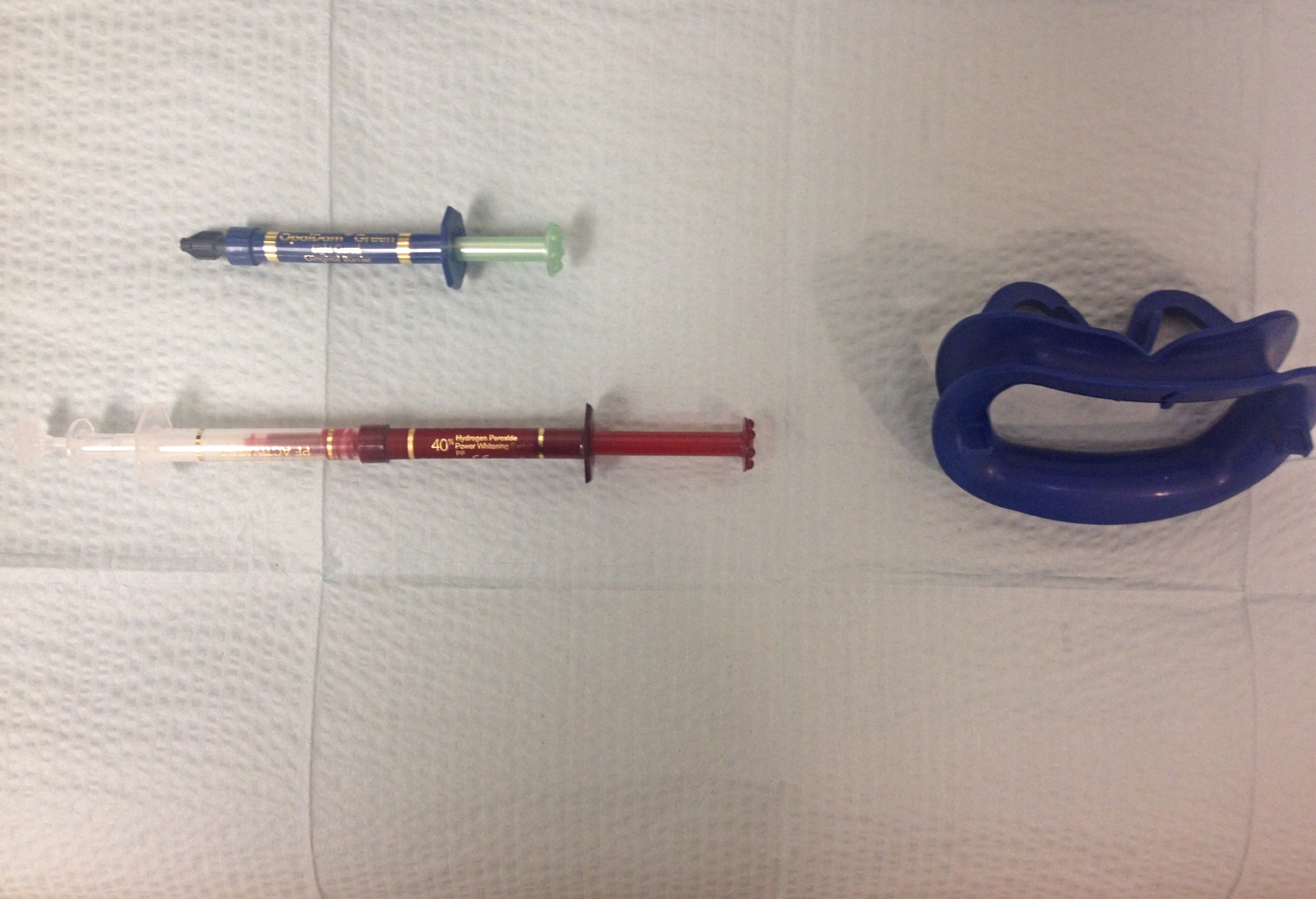
Top left- Blockout material used to protect your gums. Bottom left- In-office bleach, before activation. Right- Cheek retractors commonly used in our whitening procedures.

Top left- Blockout material used to protect your gums. Bottom left- In-office bleach, before activation. Right- Cheek retractors commonly used in our whitening procedures.

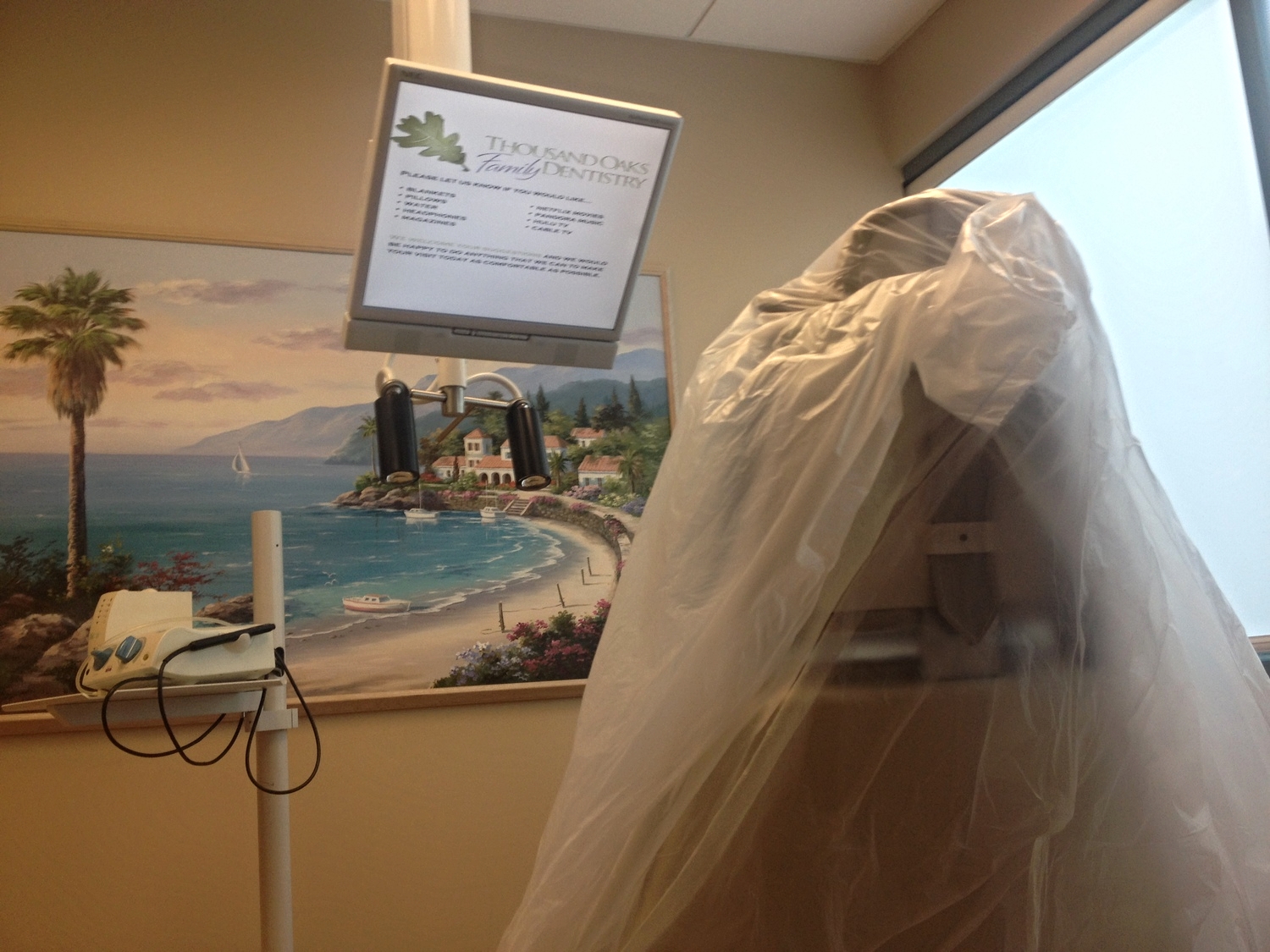
Feel free to enjoy one of our many entertainment options during your whitening procedure. 

Feel free to enjoy one of our many entertainment options during your whitening procedure. 

If you have any further questions on teeth bleaching or would like to schedule an appointment, feel free to call our office. We have helped hundreds of patients achieve healthy and beautiful smiles and can accommodate all of your esthetic needs and desires.


Comment

Covered California

Comment

Covered California

http://www.thousandoaksfamilydentistry.com/blog/2014/5/8/current-events-in-dentistry-covered-california#.U2xfxTm60yE

As of May 1st, 2014, California healthcare insurance has undergone a significant redesign and restructuring process. Under the name Covered California, it is our state’s implementation of the healthcare marketplace system set fourth by the Affordable Care Act (commonly known as “Obamacare”). Now that open enrollment has ended, many individuals have new and unfamiliar plans and benefits.  At Thousand Oaks Family Dentistry, we want to alleviate some of the confusion and alert you as to how Covered California may change your dental coverage. Take a look at these frequently asked questions:


Does my Covered California (CCA) compliant plan include dental coverage?

-For adults over the age of 18, CCA compliant plans do not have to offer any dental coverage. Depending on your provider, dental coverage may be available, but it is strictly on an opt-in basis.


I will be signing up (or signed up) individually through the healthcare marketplace. Does it make sense for me to opt in to dental coverage?

- One thing to consider is that dental insurance is structured differently from medical insurance. While medical insurance includes features such as out-of-pocket maximums and protection against catastrophic accidents, dental coverage is typically a lowered fee schedule in exchange for a monthly premium. It is ultimately your decision if this will be beneficial to your unique needs.  Our only advice is that dental plan premiums tend to follow a “get what you pay for” model. Plans with lower monthly payments typically have higher copays and out-of-pocket costs.


Will my children have dental coverage through CCA?

- Children 18 and younger are covered under CCA. However, these dental plans are additional to any insurance plans. You must opt-in or specifically seek out dental coverage for your children. It will typically not be done without your explicit consent or knowledge. Both PPO and HMO options are available, so be aware of what you are signing up for. More information can be found on the Covered California website: https://www.coveredca.com/childrens-dental/


Will the new guidelines set forth by CCA change my experience at Thousand Oaks Family Dentistry?

- The most likely answer is no. Our insurance coverage has not changed as a result of Covered California. In addition, our average patient’s dental coverage has not changed either. If you did not have dental insurance before, you will likely still be uncovered under these new provisions. An exception to this is some children (18 and under) may now be covered under CCA. Again, if this is the case you would likely have been notified by your insurance provider. 

Comment

Dentistry Through the Ages: Infants and Newborns

Comment

Dentistry Through the Ages: Infants and Newborns

Greetings and welcome to our on-going blog series, Dentistry Through the Ages. In these blog posts, we will cover age-group specific dental needs and concerns. Your life is constantly changing, and we want to equip you with the best information possible to keep your teeth healthy!

https://kariann-hong.squarespace.com/blog/2014/5/7/dentistry-through-the-ages-infants-and-newborns#.U2r2Fjm60yE

    Today, we want to address the dental concerns of families with newborns and infants. We know this can be an exciting and stressful time, with childcare advice coming from many (sometimes conflicting) sources. Hence, we want to ease your mind with our professional and scientifically proven advice on proper newborn dental care.

    Infant dental concerns actually begin during the prenatal months. Studies have shown that women with periodontal disease are at a higher risk for low birth weight and early term infants. It is important to minimize this concern by keeping up with your regular dental cleanings before and during pregnancy. Additionally, hormonal changes, increased snacking and morning sickness all put pregnant women at a significantly higher risk for tooth decay. We recommend that all of our pregnant patients pay special attention to their oral health and consider supplementing their current home care with further preventative products, such as xylitol rinses or chews.

    You can start your newborn on the path to great oral hygiene even before their teeth start to erupt. An important fact to remember is that oral bacteria is often transferred from caregivers to their children. Avoid sharing saliva with your infant, as your bacteria can start to colonize their mouth and cause tooth decay at a very young age. In fact, studies show that the bacterial profile of mothers and children match, even before the baby teeth come in! Once teeth begin to show through the gums, you can clean them using a washcloth or xylitol wipes. After two or more teeth “touch,” you should start to floss between them.   

    Once the teeth begin to develop, it is important to never put your infant to sleep with a milk bottle. The milk will sit on the teeth all night and eventually cause rampant decay. In fact, the decay pattern of night time milk bottles is so characteristic, it has earned itself the title of “bottle mouth.

The unfortunate consequences of "bottle mouth."

The unfortunate consequences of "bottle mouth."

    Beyond toothcare, infancy is a period of rapid craniofacial development. While much of this will occur naturally, proper development can be encouraged. Breastfeeding has been shown to be beneficial to proper facial growth. Global studies show that breastfeeding during the first four months of infancy are particularly critical to lower jaw development.

    Your babies teeth need to stay healthy for as long as 13 years. Thus, it is very important that you protect them right from the beginning. On top of proper home care, we recommend you bring your child in for their first check up at 12 months. This can allow us to catch decay and developmental problems before they become a much larger issue. At Thousand Oaks Family Dentistry, we are prepared to see all of your family members, no matter what the age!

Comment

Sleep Apnea Screening and Treatment

Comment

Sleep Apnea Screening and Treatment

Do you wake up feeling unrested? Do you snore often? Is it loud enough to be heard through walls? Do loved ones hear you “stop breathing” during the night?  If you answer yes to these questions, you may have a condition known as sleep apnea.

Sleep apnea is the temporary stoppage of breathing during sleep. It leaves suffers feeling continuously unrested and tired, regardless of how much rest they are actually getting. However, the complications go much deeper than tiredness. Apnea has been linked to increased incidences of health conditions such as cardiac arrhythmia, stroke and high blood pressure.

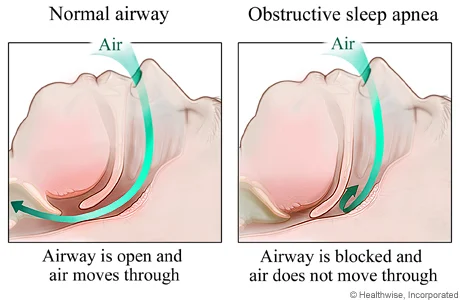
Although there are a number of different causes and types of apnea, the most common is Obstructive Sleep Apnea (OSA). This occurs when the soft tissue at the back of the throat collapses and blocks air from entering the lungs. OSA (and all types of apnea) result in fragmented and inconsistent sleep.

A diagram showing the difference between a normal patient and an OSA sufferer. Note the bottom middle of both pictures. 

A diagram showing the difference between a normal patient and an OSA sufferer. Note the bottom middle of both pictures. 

Patients suffering from apnea essentially spend their sleeping hours in an oxygen deprived state. As your body struggles to manage breathing, extra stress is placed on virtually all organs and tissues. This is why it can be detrimental to so many biological processes. The poor sleep quality arises from your brain detecting a lack of oxygen and attempting to arouse the body. This ultimately prevents you from entering and staying in a deep and restful sleep.

At Thousand Oaks Family Dentistry, we diagnose all types of apnea and can treat some OSA. We can prescribe you a take home sleep test, which gathers information on blood oxygen levels, sleep movement and other vital signs to determine the presence or severity of apnea. If you qualify and are diagnosed with OSA, we can treat you using a custom apnea sleep appliance. This appliance works by shifting your lower jaw forward, which pulls the soft tissue away from the back of the throat and opens airways. The result is easier breathing, less snoring and more restful sleep!

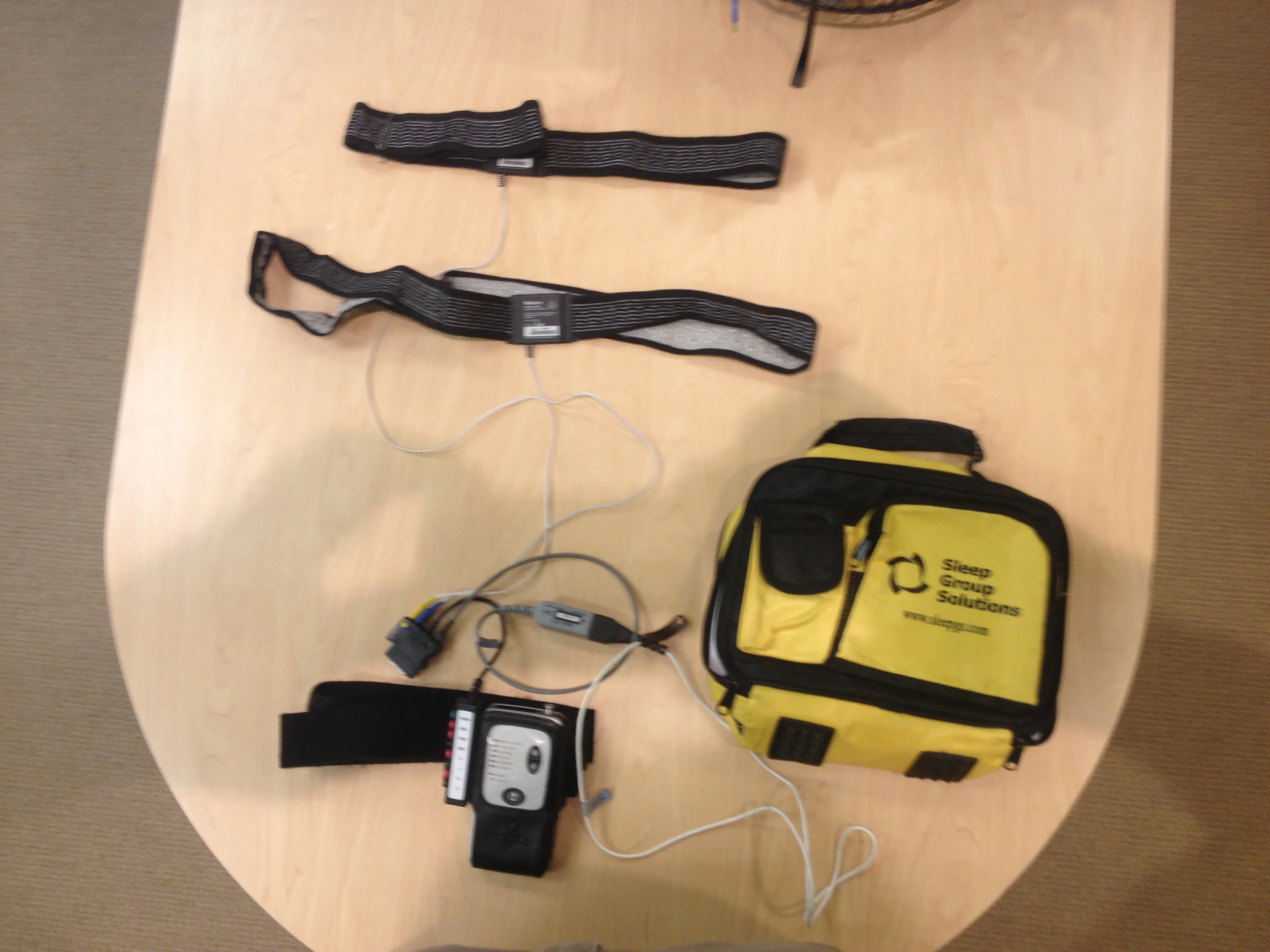
Our take home sleep test. These various monitors measure almost every facet of your sleep and give us an accurate picture of your nighttime breathing habits. 

Our take home sleep test. These various monitors measure almost every facet of your sleep and give us an accurate picture of your nighttime breathing habits. 

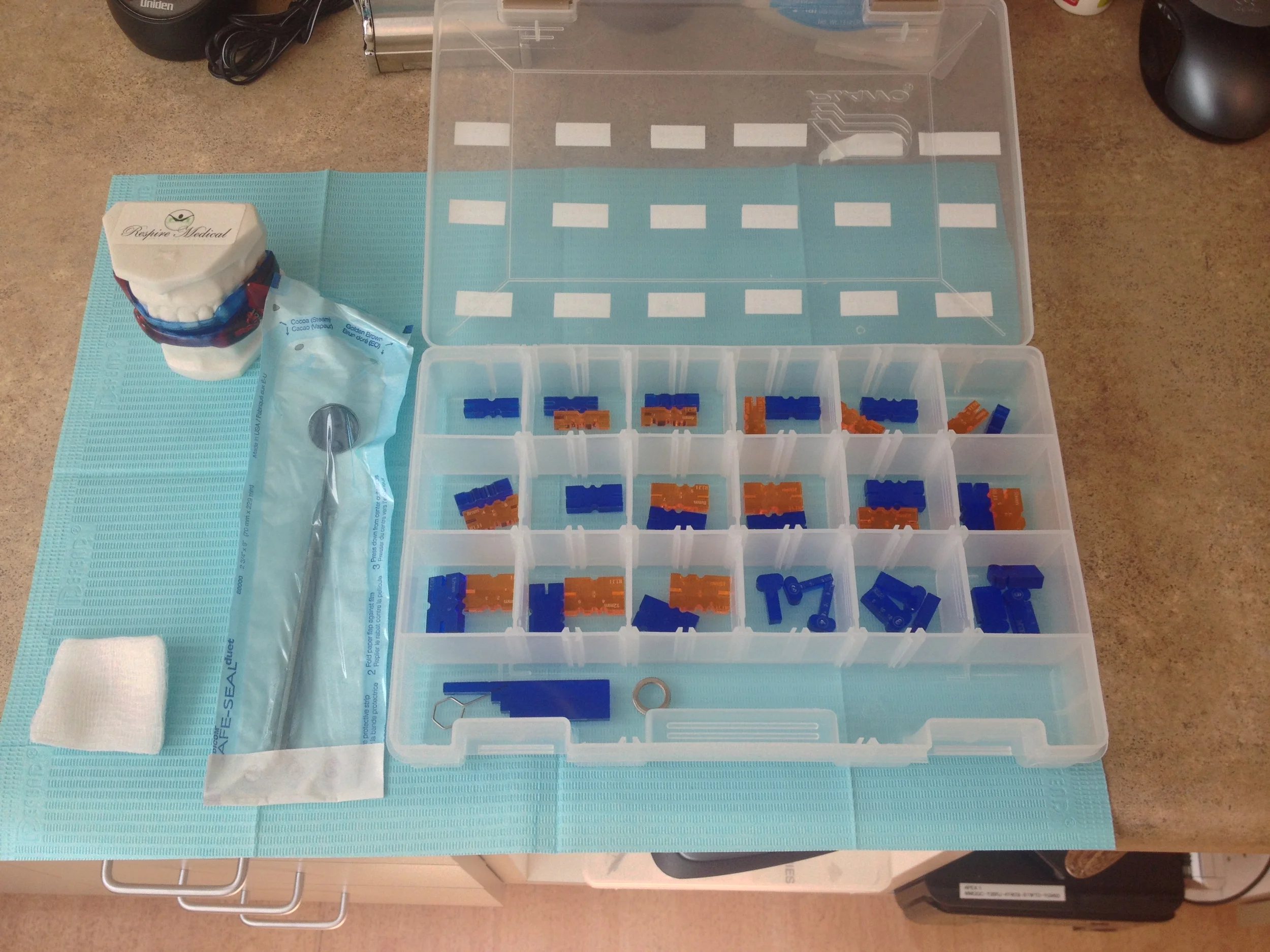
Top Left: A finished sleep apnea appliance. Right: part of our apnea diagnostic kit. These plastic pieces allow us to measure various parts of your mouth and airway.

Top Left: A finished sleep apnea appliance. Right: part of our apnea diagnostic kit. These plastic pieces allow us to measure various parts of your mouth and airway.

If you think you might have sleep apnea, or are curious on how to better manage your snoring, please schedule an appointment with our office. Our sleep tests can give results in as little as 48 hours and can be interpreted as you return the test. We will handle your medical insurance billing from start to finish and  accommodate you in every way possible. Call us today for a good night’s sleep tomorrow!


Comment

Invisalign Invisible Braces

Comment

Invisalign Invisible Braces

One of our very satisfied Invisalign patients. Crowding was addressed on both the upper and lower arches, along with bleaching using the Invisalign trays. The total treatment took 17 aligners and 8.5 months. 

One of our very satisfied Invisalign patients. Crowding was addressed on both the upper and lower arches, along with bleaching using the Invisalign trays. The total treatment took 17 aligners and 8.5 months. 

Your smile is one of your most noticeable and forthcoming facial features. Naturally, you take great care of your teeth, brush and floss daily and possibly use whitening products. Still, there is one feature of smile and facial esthetics that cannot be addressed by home care: Orthodontics. If you are interested in having a straighter smile with minimal dental appointments, excellent predictability and discreet treatment, you may be a good candidate for Invisalign.

Invisalign is a system that uses dental impressions, advanced computer programs and clear plastic trays to provide virtually invisible orthodontics. The process is very simple. On your first appointment, we will take a series of impressions and pictures and send them to Invisalign’s headquarters. After that, a representative will send Dr. Kari a digital mockup of your smile, including the movements each tooth is predicted to make. After she approves and adjusts Invisalign’s plan, a set of aligner trays are shipped to our office.

You then return for your second appointment, where we use composites (same kind used in tooth colored fillings) and a special template tray to construct a series of tiny “buttons” on your teeth. These buttons allow the trays to latch and move teeth with extra torque, when necessary. This appointment lasts about 45 minutes and you leave with your very first set of trays!

From left to right: We use the blue trays to take a quick impression of your teeth, followed by a "bite impression" using the purple material in the applicator gun (called Regisil). After invisalign receives and processes your impressions, we receiv…

From left to right: We use the blue trays to take a quick impression of your teeth, followed by a "bite impression" using the purple material in the applicator gun (called Regisil). After invisalign receives and processes your impressions, we receive your custom trays (pictured far right). 

Most Invisalign treatment plans last around 9 months to 2 years, with about 15-30 included trays. You will be expected to periodically return to our office to ensure your treatment is going as planned. While this timeframe may seem lengthy, remember that the trays are invisible, comfortable in the mouth and removable. Any time you need to eat, brush or whiten your teeth, you can remove your appliance in a matter of seconds.

While Invisalign is an extremely predictable and effective process, not everyone is a good candidate. Those who cannot devote the majority of their day (awake and asleep) to wearing trays will encounter a delayed or entirely ineffective orthodontic treatment. For this reason, we do not recommend Invisalign for children, as “patient compliance” is especially difficult to obtain. Furthermore, certain tooth movements are impossible without traditional wire-and-bracket braces. Being a removable piece of plastic, there are limitations to the directions that Invisalign can precisely realign teeth. To determine if you are a good candidate, or address your questions and concerns, please schedule a consultation with our office. 

Comment

New Technology- The Wand

1 Comment

New Technology- The Wand

For many patients, the dreaded “ Novacaine* shot” is a source of anxiety, fear and apprehension. The process almost seems backwards; you have to sit through a painful injection just so you can avoid being in pain later. However, this does not have to be the case.

At Thousand Oaks Family Dentistry, all of our operatories are equipped with a device called The Wand. This device uses modern technology to provide pain-minimized and often undetectable dental anesthetic delivery.

While this system still utilizes a needle, this is the end of its similarities with traditional syringes. It uses air power and electric servos to target the primary source of anesthetic discomfort: delivery speed. In almost all dental shots, pain isn’t sourced from the actual needle, but rather from the medicine entering the tissue. The Wand counteracts this by giving the dentist complete control over speed of delivery.

By adding the anesthetic at a slower and more consistent speed, the tissue has time to numb at an appropriate pace to delivery. This minimizes pain and gives the doctor absolute control over location and amount of medicine delivered. Many of our patients are unaware that they have even received a shot by the time we are done!

*Note: Novacaine is no longer a commonly used anesthetic in dental offices. Our office uses a variety of optimized Novacaine variants for different applications and conditions.


1 Comment