Video Blog on Periodontal Services

1 Comment

Video Blog on Periodontal Services

Greetings, my name is Dr. Kari Ann Hong, and I have a family dentistry practice, where I see patients from all age groups.  Approximately ⅓ to ½ of the population at large is affected by periodontal disease.  Periodontal disease is when the bacteria in the mouth causes loss of the bone surrounding the teeth.  From a patient’s perspective, gum disease can be characterized by bleeding gums, loose teeth, bad breath, and a feeling of deposits stuck to the teeth.

As a dentist, I determine if someone has periodontal disease by a combination of evaluating the bone levels and build up on a dental x-ray, measuring the gum health with something called periodontal probing depths, and by a visual inspection of the quality of the gum tissue.  Periodontal probing depths are a measurement of the height of the gum tissue to where the tissue is attaching to the tooth.  In health these measurements are 1-3mm.  Periodontal disease is diagnosed as mild, moderate, or severe and this is primarily based on the amount of bone loss present.

I diagnose a service called scaling and root planing when the probing depths are 4mm or more, the gum tissue bleeds when touched, bone loss is present, and there is tartar build up under the gum tissue.  Scaling and root planing is done with local anesthesia and is usually billed by quadrant and/or the number of appointments required to adequately remove all of the build up. In severe cases, scaling and root planing can take as many as four separate appointments.  

There are some practices that will recommend procedures called irrigation,  localized antibiotic placement (Arrestin), or laser treatment to help with the treatment of periodontal disease.  Irrigation involves squirting an antibacterial prescription mouth wash called Chlorhexidine or Peridex around the teeth.  Arrestin is an antibiotic called doxycline that is injected directly into the deeper pocket depth areas.  Laser treatment involves shining a specific wavelength of light in the pocket area to kill the bacteria.  In my opinion, the irrigation and Arrestin treatment are helpful at the time of treatment, but do not have enough long term benefits to justify doing the procedure.  Laser treatment is an effective way at killing bacteria and has longer acting benefits than the irrigation and Arrestin, but is not a cure all for periodontal disease.  Those with periodontal disease need to adhere to a consistent professional periodontal maintenance routine in order to maintain their dental health.

If you are interested in periodontal services, please fill out the contact us information at the bottom of this page.


1 Comment

Specialist Spotlight- Southern California Endodontic Group

Comment

Specialist Spotlight- Southern California Endodontic Group

At Thousand Oaks Family Dentistry, we are proud of the network of skilled dental specialists we have created. Whether you are in our office or one of our associates’ offices, know that you will be treated with respect, kindness and experience. Today, we would like to highlight Southern California Endodontic Group, the office of Doctors Pokras, Trnavsky, Lazarou and Ghahraman.

At Southern California Endodontic Group, an array of services are provided towards preserving infected or chronically inflamed teeth. Beyond root canals, their office can diagnose internal fractures in tooth roots, retreat failing root canals and more. The end result is relief from pain, removal of infection and a longer lifespan for a tooth that would otherwise need to be extracted.  

Pokras, Trnavsky, Lazarou and Ghahraman represent decades of experience in endodontic treatments with successful outcomes. Aside from clinical dentistry, they are active in local dental societies, academies and dental schools as lecturers and mentors. In the office, their expertise is backed by a number of leading technologies and instruments. Cone beam CT scans are used to visualize fractures, cracks and infections, while microscopes elucidate every tiny detail of the tooth’s inner structure. This combination of knowledge and technological power allow them to deliver fast, comfortable and long lasting treatments. 

Beyond technical abilities, Southern California Endodontic Group prides itself in creating a warm and familiar environment. From the front desk staff to the various amenities, their goal is to treat everyone who walks through the door like family. Patients feeling apprehensive about dental treatment will be met with a variety of comforts, from blankets to in-operatory TVs and even massaging chairs. In total, they want you to feel relaxed and comfortable for the entire duration of your appointment and beyond; Their office will often follow up with courtesy calls to make sure you are feeling great about the results of your treatment. 

We love working with So Cal Endo Group because of their combination of clinical success and caring atmosphere. Our patients are always impressed and satisfied with their treatment, resulting in a great all-around dental experience. If you would like to know more about Doctors Pokras, Trnavsky, Lazarou and Ghahraman or any other of our fantastic specialists, please give us a call.  We want our patients to know they are in good hands, whether with us or one of our specialists.

Comment

Video Blog on Dental Emergencies

Comment

Video Blog on Dental Emergencies

What constitutes a dental emergency?  If your face is swollen and you are in pain, that is the number one reason to call a dentist today.  Swelling of the face is the sign of a serious infection called an abscess.  It is necessary to seek treatment immediately to prevent the spread of the infection.  If it is after hours, then it is recommended you seek treatment at an urgent care or emergency room.  

The second biggest emergency is when an adult  tooth is knocked out of its socket.  This can happen from running and falling, falling off a bike, getting hit by a car, playing sports and getting hit in the face. It might be possible to replant the "avulsed" tooth, but it needs to be done in the first 30 minutes to one hour after it falls out, in order for the replantation to have a chance at being successful. To transport the lost tooth, it is best to either place it in a cup of milk or store it in your mouth until you are able to see a dentist.

The first two emergencies I mentioned are relatively rare occurrences.  The most common emergency I see is when a patient is having tooth pain.  And the second most common is when someone chips a front tooth or breaks a back molar.  

If you are having a dental emergency, please call my office and we will do our best to see you as soon as possible.


Comment

Video Blog on Sleep Apnea

Comment

Video Blog on Sleep Apnea

Greetings, my name is Dr. Kari Ann Hong, and I have a family dentistry practice where I see patients from all age groups.  In my practice, we help educate our patients about medical conditions that can affect someone’s long term health.  Sleep apnea is one such condition, that is characterized by someone that stops breathing for at least 10 seconds for multiple times an hour.  Severe sleep apnea is defined as anyone that stops breathing 25 times or more an hour for at least 10 seconds at a time.  

Snoring is sometimes a symptom of sleep apnea, as is being able to easily fall asleep during the day.  The only way to diagnose sleep apnea is to do a test while sleeping.  Fortunately, these sleep tests can now be done in the comfort of your own bed. Once the sleep test has been done and a diagnosis of sleep apnea is made, then a variety of treatment options can be considered. For patients that have been diagnosed with mild or moderate sleep apnea or those that are unable to tolerate a CPAP, BIPAP, or APAP machine, then a dental sleep apnea appliance is recommended.  In my office we have a machine that sends sonic sound waves through the mouth to determine the best jaw position to maximize the airway.  An acrylic appliance that fits on the upper and lower arch is then made to mimic this jaw position.  

The fabrication of a dental sleep apnea appliance is covered by PPO medical insurances.  We have the ability to bill your medical insurance for you.  If you are interested in a dental sleep apnea appliance, please fill out the contact us page below.

Comment

Dental Library Review- Franklin and the Tooth Fairy

Comment

Dental Library Review- Franklin and the Tooth Fairy

http://www.thousandoaksfamilydentistry.com/blog/2014/9/29/dental-library-review-franklin-and-the-tooth-fairy#.VCocSStdVDw=

Welcome to The Dental Library Review! In this feature, we will be reviewing and highlighting different children’s books we have collected at our office. Our staff have personally used these books with their own children and have had great reception. Today, we will be going over Franklin and the Tooth Fairy by Paulette Bourgeois and Brenda Clark.

This book follows the characters and storyline of Franklin the Turtle and his animal buddies. In this tale, Franklin’s best friend, Bear, loses his first tooth. Startled by his friend’s joyous response, Franklin contemplates how and why he doesn’t have any teeth to lose. As he learns about the tooth fairy, he becomes apprehensive about not being able to “grow up” and get adult teeth. However, his parents clear up the confusion, and leave him a small present to celebrate him growing up, since he can’t get a visit from the tooth fairy.

We love this book because it deals with using lost teeth as a measure of “growing up.” Children typically lose their first tooth between ages 5 and 6, a range that can seem like an eternity to young minds. This book helps reassure children that although their friends may be losing teeth before them, they are all getting older every single day. Kinds tend to use lost teeth as a measure of age as it is a very visible milestone. This book is here to remind them that everyone grows up at their own pace, regardless of lost teeth.

Given the content and word count for this book, we would recommend it as a bedtime story or a guided reader for slightly older children. As with all the stories we review, feel free to check it out at your next appointment. We are always happy to do anything we can to get your family excited and educated about dental health topics!


Comment

Specialist Spotlight- Nagel Orthodontics

Comment

Specialist Spotlight- Nagel Orthodontics

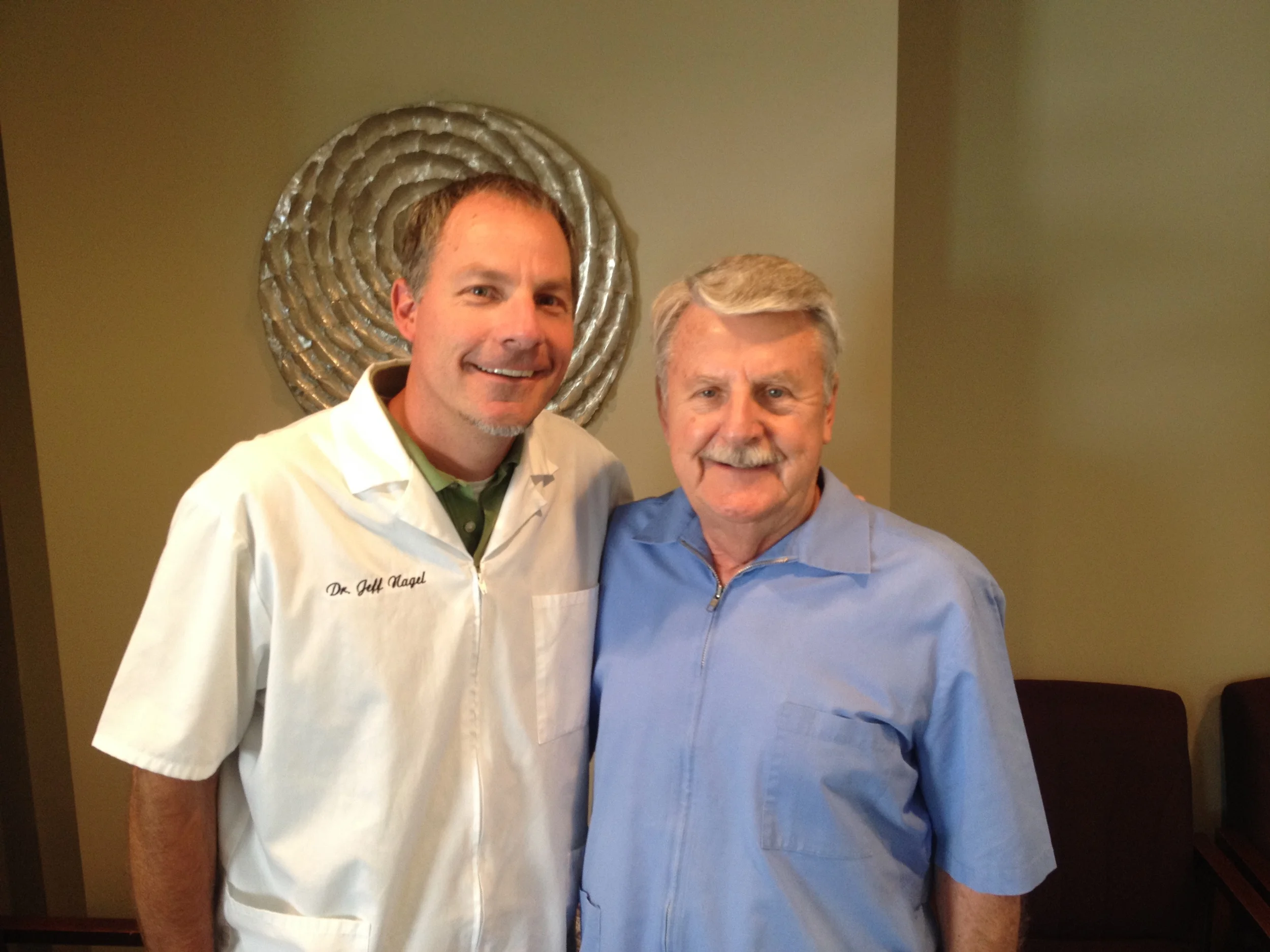
At Thousand Oaks Family Dentistry, we are proud of the network of skilled dental specialists we have created. Whether you are in our office or one of our associates’ offices, know that you will be treated with respect, kindness and experience. Today, we would like to highlight the services offered by Doctors Norman and Jeffrey Nagel at Nagel Orthodontics.

As an orthodontic practice, Nagel Orthodontics addresses the functional and esthetic needs of many patients in almost every age group. Beyond simply “straightening teeth,” they service a number of problems relating to tooth spacing, biting patterns and jaw position. Orthodontists have a deep understanding of dental mechanics and how your mouth could function at its best. Orthodontic treatment can be appropriate or necessary for many ages, ranging from early intervention for severe crowding to mild readjustments for adult patients.

As a father and son team, Doctors Nagel and Nagel bring over 40 years of experience to treating the Thousand Oaks and Simi Valley areas. Between the two of them, they typically work 60 hours a week, making scheduling an appointment convenient and flexible. They pride themselves in treating patients of all ages- occasionally treating three generations of the same family. At their office, the staff members are caring, friendly and happy to accommodate you or your loved one’s needs. You will probably also notice that the door to their back office is never closed- a true sign of their transparency and welcoming atmosphere!

Nagel Orthodontics utilizes electronic charting, digital impression and even cone beam CT scans to better visualise and manage your orthodontic needs. This information can be made available to either of their offices in seconds, allowing you and your family flexibility between their locations. However, they still take the time to address every case by hand, using plaster and metal articulators (a time consuming step typically reserved only for difficult cases). This combination of new and timeless techniques assures that your case is properly understood and treated with expertise.   

We love working with Nagel orthodontics because we know that your case will be handled with utmost attention. They understand the importance of your overall oral health, and work closely with our office to ensure continuous dental care. If you would like to know more about their office, or any of the other specialists we work with, please give us a call. We want our patients to know they are in good hands, whether with us or our one of our specialists.


Comment

Fluoride- The Facts

Comment

Fluoride- The Facts

One of the most controversial topics in dentistry (and possibly all of healthcare) is the use of fluoride in our water supplies and dental products. What is it? Why do we use it? Could it harm my family? Today, we would like to take a moment to lift the myths and mysteries away from fluoride- a safe and effective measure for remineralizing and protecting teeth.

Fluoride (F-) is a negatively charged ion, similar to chloride ion (Cl-) in sodium chloride (Table salt). As such, it needs to be bound to a positively charged ion to exist as a solid mineral. This is why the labels on toothpastes and other dental products will list “stannous” fluoride or “sodium” fluoride as the active ingredient. The first part of the compound merely serves as a safe means of stabilizing the F- ion for delivery. Like table salt, when a compound with fluoride is dissolved into a solution, some of the ions will split into two, leaving a small portion of free floating F- ions.

The chemical mechanism by which Fluoride remineralizes and repairs is quite simple. The outer enamel layer of our teeth is essentially a crystal composed of calcium and phosphate. As acid, biofilms and bacteria break down this crystal, the calcium and phosphate become weakened and dissolve into our saliva. Fluoride works by encouraging the two compounds to reunite and incorporate back into the enamel. Similarly, If teeth are exposed to fluoride during development, the enamel tends to grow stronger and more resistant to decay. Scientific studies have also shown that fluoride inhibits bacteria’s ability to produce acid and stick to the teeth. This combination of effects makes fluoride an excellent candidate for fighting tooth decay.

Since fluoride needs to be in close proximity to the teeth to work, it’s effectiveness is dependent on exposure time and the not amount consumed. For example, swishing for 30 minutes with shot glass of fluoridated water would be more effective than gulping down a glass of fluoridated water in 30 seconds. Likewise, this is the reason toothpaste is not (and should not be) consumed for it to work ideally.

Since 2007, the water supply in Southern California has been fluoridated to a level of about 0.7 PPM (parts per million). The EPA suggests that any any fluoride level under 2.0 PPM is safe for consumption, while levels between 0.7PPM and 1.2PPM are ideal for medical effectiveness. As such, our water supply is well within safe limits. Additionally, some sources of water are naturally fluoridated without man made intervention. Here, governments and municipalities will occasionally have to de-fluoridate water before it is ideal for consumption. In addition to water supplies, many dental products and supplements contain fluoride in safe levels. Typically, any product advertising “anticavity” or “helps rebuild teeth” contains some amount of fluoride.

Although the medical benefits and potential risks of fluoride are well known and documented, some individuals feel that it is unsafe for human use. Common sources of fear are over impaired glucose metabolism, pineal gland hardening, poisoning and decreased cognitive ability. It is important to note that no reputable scientific journal supports any of these claims in regards to fluoride administered or used properly.

Many websites that quote scientific studies to prove the harms of fluoride typically cite outdated or unreliable papers, or do not understand (or relay) what the paper proves. For example, some studies have highlighted that fluoridated water can be dangerous when administered in extremely high levels. This is very true; large doses of fluoride can be quite harmful or even deadly, just like too much tylenol, alcohol or allergy medication. However, when used properly, fluoride is an extremely safe method of protecting our teeth.

In reality, the main concern with fluoride use and exposure is the onset of fluorosis in young children. As the adult teeth develop, overexposure to fluoride can cause white streaks or marks to appear within the outer enamel layer. This is typically found in children who start to take fluoride supplements at a very early age or are have their teeth brushed very often with too much toothpaste. To help prevent fluorosis, we recommend that children ages three and under should only brush with a smear of fluoride toothpaste, while ages six and under should brush with a pea sized portion. Your child should always be guided or supervised during brushing, to ensure they are applying toothpaste, spitting and rinsing properly. Extra fluoride supplements and treatments should be avoided, unless recommended by a dental professional. In general, fluorosis is generally a concern only until age 8, when the adult teeth have finished developing.

At Thousand Oaks Family Dentistry, we are firm believers in the efficacy of fluoride. We offer topical fluoride treatments for all patients with active tooth decay. In addition, we recommend ACT Fluoride rinse instead of mouthwash for our adult patients who have a history of cavities.  For those with aggressive decay, we offer a range of products that combine fluoride with xylitol, calcium and phosphate to arrest further cavities before they progress. In total, our entire spectrum of preventative recommendations incorporate fluoride to some degree. If you would like to know more about fluoride, how it works or why we use it, please call our office. We want you to feel assured about all of your dental health needs and choices!
Comment

Dentures

Comment

Dentures

One of the greatest aspects of modern dentistry is our ability to replace missing or extracted teeth. Today, patients typically seek out implant crowns and bridges as quick and safe methods of restoring their smiles. But what about dentures? The name alone might conjure up pictures of older relatives and seltzer tabs, but they are still an excellent way to fix a gap in your dentition. At Thousand Oaks Family Dentistry, we offer a number of denture options for patients needing everything from temporary single tooth replacement to permanent appliances for entire arches. No matter what your needs, there is likely a denture solution to fit it!

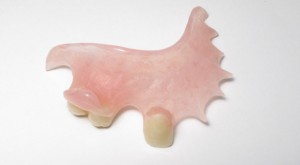
Patients who still have some existing teeth are typically eligible for partial dentures. These appliances bridge one or more empty spaces between teeth to recreate a natural smile. They usually require healthy molars or premolars to snap on to and give them rigidity. Some partial dentures are made entirely out of acrylic. These are commonly referred to as “flippers” and typically serve as temporary solutions until an implant can be placed or a permanent denture can be made. Because they are plastic, they need to be made thick for rigidity. Likewise, flippers can feel bulky and uncomfortable and are prone to becoming brittle. Still, they are an excellent interim esthetic solution for patients missing teeth.

a full acrylic partial denture or "flipper"

a full acrylic partial denture or "flipper"

Partial dentures can also be made using a combination of acrylic and cast metal. These devices are stronger, thinner and typically more comfortable than flippers. When you smile or open your mouth, pink and enamel colored acrylic hide the metal framework beneath and the appliance looks like natural tissues. Rigid metal partial dentures are appropriate for long term use and are often the most comfortable option. If you have enough teeth to anchor the device, they can fit snugly and comfortably in your mouth.

A partial denture with metal framework

A partial denture with metal framework

If you are missing all teeth on an entire arch, you are likely eligible for full dentures. Full dentures are made out of acrylic and stay in your mouth using the suction created between your gums and the denture base. Since they rest on your gum tissue, full dentures can take some time to get used to. Many patients will feel sore spots or an uneven “rocking” sensation until they become accustomed to the feeling of the appliance. Our office can make small adjustments to dentures to better accommodate your mouth, but they will never feel as natural as something anchored to your teeth. Still, they are a great alternative to smiling, chewing and speaking with no teeth.

a full upper and lower full denture

a full upper and lower full denture

A final subset of dentures are implant supported dentures. Here, an acrylic appliance is mounted to 2 or more implants (depending on the number of teeth replaced) through rubber snaps. These are typically the most comfortable denture style for replacing whole arches of teeth. However, this treatment option is both costly and time consuming; Implant placement can take up to six months to become healed and sturdy enough to support a denture. Still, many patients are extremely satisfied with the resulting product, as the implants keep the appliance rigid and out of contact with gum tissue.

A diagram of how implant supported dentures are mounted

A diagram of how implant supported dentures are mounted

No matter what type of denture we are making, our office needs three types of impressions: one impression of the teeth (or gums) on which the dentures will be made, one of the opposing teeth and one of how the teeth come together when you bite down. Once we take these impressions, we send them off to a lab along with instructions on tooth color, transparency and brightness. From there, the lab will either fashion your permanent denture, make a wax try-in (a soft, denture lookalike used by our office to ensure fit and esthetics), or send us custom trays. Custom trays are impression trays that precisely fit the dimensions of your mouth. These instruments insure a perfect impression (and a better fit) for the final denture. Once we are ready to deliver your appliance, you will return to our office for a short fitting appointment where we can make minor adjustments.


The true scope of dentures extends into many different devices, materials and mounting styles. We like to have a lengthy discussion with every patient prior to taking impressions, to make sure they will satisfied with the final product. Only a consultation between you and Dr. Hong can show us what kind of denture is appropriate for your specific needs. If you would like to know more about dentures or any other type of appliance offered at our office, please give us a call. We are always happy to walk you through any and every procedure!


Comment

Eating Disorders and Oral Health

1 Comment

Eating Disorders and Oral Health

Anyone affected by an eating disorder can tell you about its tolls on whole body health. Whether overeating, binging eating or bulimia, these conditions have very tangible effects on the entire system. We would like to take a moment to highlight how some of these disorders affect oral health. Please understand that this information is not presented to to scare or shame anyone. Rather, we want our patients to understand what is happening to their mouths, and how to go forward and manage the diseases’ effects.

Eating disorders involving overeating can damage teeth by creating prolonged acidic events in the mouth. Every time we eat or drink, our mouth pH turns acidic for the duration of the meal and the following 30 minutes. If someone were to eat once every half hour, their mouth would spend the entire day in a state of acidity. As this acid sits on the teeth, it begins to break down the tooth enamel, causing decay. Thus, overeaters who graze throughout the day are particularly susceptible to poor oral health. In addition to problems with the amount of food, the type of food consumed presents problems as well. Binge eaters can gravitate towards sweet, sticky and carbohydrate heavy products (“comfort foods”). These foods are excellent at adhering to the teeth, causing a drop in mouth pH and fueling bacteria to colonize and produce further acid. This can lead to more decay, recession and gum disease. In total, overeating can take many of the problems associated with frequent snacking or poor diets, and amplify them.

No matter what your diet, sticky, sugary and carbohydrate heavy foods are excellent at causing tooth decay. Overeaters are particularly susceptible to these effects due to their high frequency of exposure. 

No matter what your diet, sticky, sugary and carbohydrate heavy foods are excellent at causing tooth decay. Overeaters are particularly susceptible to these effects due to their high frequency of exposure. 

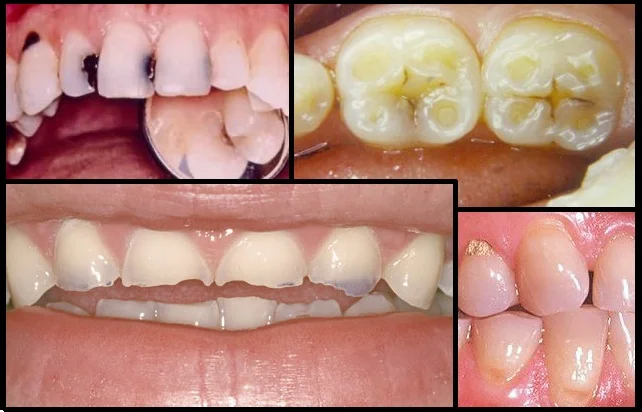
At the opposite end of the spectrum, bulimia can also be particularly damaging to the teeth. Purging can leave patterns of acid erosion across the entire mouth, causing extensive enamel degradation and gum inflammation. Stomach acid is much stronger than any pH drop induced by food consumption, and thus the effects of bulimia manifest themselves very rapidly. In comparison, each session of purging would be akin to rinsing your whole mouth with concentrated lemon juice. These effects can be further amplified if the acid isn’t rinsed off and allowed to sit on the teeth. Time is an important factor in tooth decay, and the longer the teeth are exposed to acid, the more extensive the decay will be.

A visualization of the affects of bulimia on teeth. From bulimiahelp.org

A visualization of the affects of bulimia on teeth. From bulimiahelp.org

While this information may seem daunting, it is important to remember that there are ways to improve your oral health and stop the progression of decay. Fillings, crowns and root canals can halt existing cavities and pain while restoring the esthetics of your smile. For teeth in the early stages of decay, there are a number of products to help repair enamel. Rinses such as Carifree CTx3 offer remineralization through fluoride and xylitol exposure, while pastes like GC MI-Paste provide extra calcium phosphate for rebuilding enamel. Overall, the important thing to remember is there is always a solution to your current oral state.

Again, our office presents this information to help you better understand how a psychological disorder (eating) can affect your physical body (teeth). If you are affected by an eating disorder, we encourage you to seek professional help. We want all of our patients to lead healthy lives, and are happy to help you find inner wellness!

1 Comment

New Technology- The Isolite

1 Comment

New Technology- The Isolite

Throughout the years, the practice of dentistry has certainly gone through many changes. New technologies have made the average appointment, quicker, more comfortable and more productive. At Thousand Oaks Family Dentistry, we stay at the forefront of the dental industry, always updating our equipment and techniques to the latest standards. One such instrument we are proud to utilize is the Isolite vacuum system.  

In the past, even simple dental work was clinically challenging to keep dry and clean.  An assistant would have to hold multiple suctions for the duration of your appointment, taking care to protect your tongue and cheeks. While effective, this process is cumbersome, difficult to use on certain teeth and ultimately less relaxing for the patient. The Isolite streamlines this entire process, while adding an extra dimension of comfort to your visit.

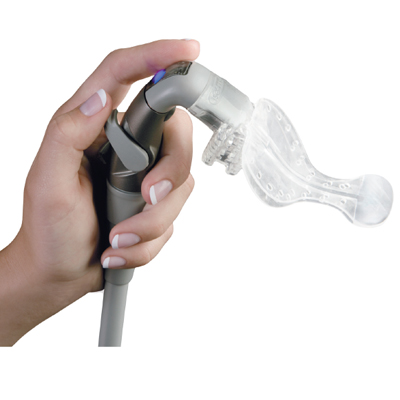
An Isolite handpiece. The clear, flexible plastic forms a mouthpiece that keeps you safe and comfortable. 

An Isolite handpiece. The clear, flexible plastic forms a mouthpiece that keeps you safe and comfortable. 

The Isolite is a specialized suction system mated to custom sized mouthpieces. It connects to the central vacuum line at our office and is installed in every one of our operatories. The mouthpieces provide a comfortable place for you to rest your mouth along with continuous suction and lighting. They have two flexible “wings” that wrap around your tongue and cheek, creating a safe barrier between our instruments and your soft tissue. The end result is a quicker, safer and more comfortable appointment. Additionally, since the Isolite provides more thorough suction, it keeps our work area cleaner and drier. This translates to more precise preparations and stronger cement bonds with better longevity. 

An example of the Isolite in use. 

An example of the Isolite in use. 

On top of coming in five different sizes, the Isolite mouthpieces can be further trimmed and shaped in a matter of seconds. Most patients find the fit to be quite comfortable, often forgetting we are using it. Overall, we have had excellent results with this system and use it for nearly every (non-cleaning) appointment. If you would like to learn more about the Isolite and why we use it, please give us a call. We are always happy to educate our patients on the instruments and techniques used at our office!

1 Comment