
Root Canal Rumors

Comment

Root Canal Rumors

    If you search the web for “root canals” right now, chances are you will get two kinds of results: advertisements for local endodontists (root canal specialists) and articles on the dangers root canal treatment. Multiple pages will come up claiming endodontics are everything from toxic to cancer causing and even DNA altering. Is there any merit to these arguments? In this article, we hope to show you the truth behind root canals- a safe and remarkable treatment that has saved millions of teeth from extraction!

    Before we explain the controversy behind endodontics, we need to clarify how the procedure works in general. When a tooth becomes traumatized -be it from decay, physical force or extreme temperatures- the nerve tissue inside can become irritated and dies. This leaves behind a perfect space for bacteria to colonize and form an abscess. The abscess is a collection of bacteria that your immune system has contained and walled off, but cannot eliminate.

Notice the dark halo around the tooth root (where the arrow is pointing)? That is an abscess that will need to be treated with a root canal. 

Notice the dark halo around the tooth root (where the arrow is pointing)? That is an abscess that will need to be treated with a root canal. 

A root canal tries to interrupt this process before the abscess leads to a dangerous systemic infection or damages the tooth beyond repair. Essentially, the inner tooth structure is cleaned, shaped and sterilized using very specific techniques. After the tooth is completely prepared, the roots are filled with a material called Gutta Percha. Gutta Percha is a natural rubber derived from tree sap that both seals the tooth and resists breakdown. After the endodontic treatment is completed, a crown is placed for increased rigidity and longevity.
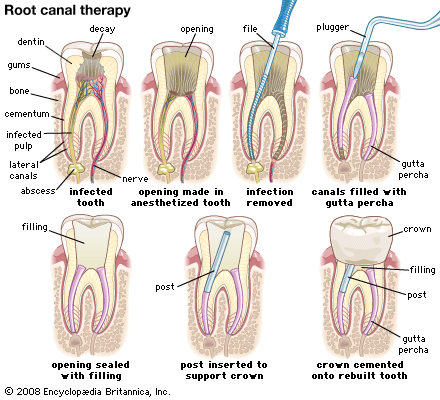
A visual guide on how root canals are performed

A visual guide on how root canals are performed

    Many articles that criticize endodontic treatment quote studies that were performed by Dr. Weston Price in the 1920’s. His research indicated that bacteria from incompletely sealed root canals could spread out to the rest of the body and cause systemic problems like arthritis and cancer. These conclusions were quickly disproved, as his data was obtained using outdated and inaccurate scientific methods. Current research shows no correlation between root canal treatment and increased risk for any disease. It is important to remember that the end goal of endodontics is to lower the bacterial load from infection, so that your immune system can naturally eliminate any residual microorganisms. In this sense, endodontics seek to work with your body, not against it!

    Still, many internet blogs insist that root canals can cause cancer. A commonly quoted statistic is that 97% of terminal cancer patients have at least one root canaled tooth. First, it is unclear what scientific study this number actually originated from. Secondly, even if there is a correlation, there is no causation between root canals and cancer. It would be equally (in)valid to say that cancer causes root canals- a truly absurd notion. Finally, this statistic is almost certainly false. A 2013 study by the Journal of the American Medical Association found that patients with root canals actually had a 45% lower cancer risk (again, this describes correlation and not necessarily causation).

    Overall, we can see that the majority of the anti-root canal argument relies on 90 year old disproven research, conjecture and anecdotal evidence. In contrast, peer-reviewed scientific research on endodontic treatment has continuously demonstrated that root canal therapy is safe, effective and highly successful. If you have further questions on root canals and why they are great treatment options, please give our office a call. We are always excited to keep our patients informed and knowledgeable on the best practices in dentistry!



Comment

Bacteria and Tooth Decay

Comment

Bacteria and Tooth Decay

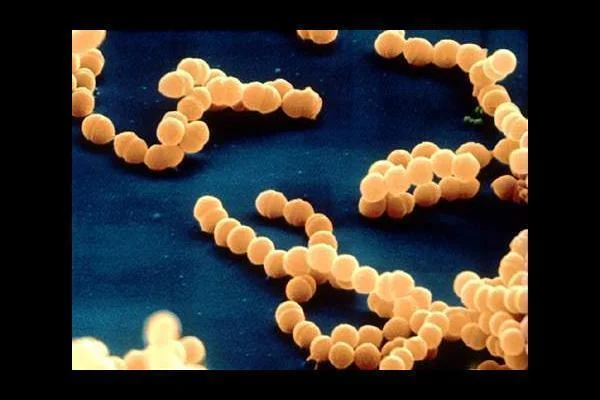
An electron microscope image of S. Mutans, a common oral bacteria. 

An electron microscope image of S. Mutans, a common oral bacteria. 

As you probably know, nearly every surface of the human body is home to bacteria. In even the cleanest, healthiest individuals, bacteria outnumber human cells by a ratio of 10 to 1! Your mouth is no exception to this, as it contains one of the the highest bacterial counts and organismal diversities in the entire body. With this in mind, microorganisms play an enormous role in dentistry and oral diseases. Today, we want to take a closer look at how bacteria are major contributors to tooth decay and cavities.

Nearly every surface of your teeth are covered in a bacterial structure called a biofilm. This formation is a sticky “home” that the bacteria produce to allow them to adhere to hard surfaces. While the biofilm is still soft and removable, we call it plaque. Proper homecare can remove plaque daily and keep the bacterial count down. However, if the plaque remains undisturbed for about 48 hours, it starts to harden and turn into tartar. Once tartar forms, it creates a strong bond to enamel that needs to be removed by a dental professional.

In the dental biofilm, the most destructive bacteria is known as Streptococcus Mutans. S. Mutans likes to colonize teeth early on in biofilm formation, along with many other species of microorganisms. When we eat sugars, starches and carbohydrates, S. Mutans processes the glucose molecules to make acid. This acid, in turn, is a primary contributing factor to tooth decay. Thus, individuals with a high S. Mutans count typically have an elevated risk for cavities.

Interestingly enough, S. Mutans species are highly correlated between children and their caregivers. Even adopted children and kids who hereditarily lack teeth tend to have the same S. Mutans breeds as their mothers, fathers or nannies. With this in mind, it is important to remember not to share utensils or cups with your children (if possible). Furthermore, cleaning off pacifiers or other teething toys with your own saliva is not recommended. Ideally, you want to lower or prevent your child’s exposure to S. Mutans for as long as possible.

Fortunately, there are a number of products targeted against S. Mutans that you are likely already using. In addition to remineralizing enamel, fluoride has been shown to disable a specific bacterial enzyme and prevent it from making energy. This has a significant impact on how fast and large S. Mutans colonies can grow. Furthermore, the sugar substitute xylitol is known to interfere with how S. Mutans can adhere to tooth structure. Xylitol is a natural compound made by plants that is used in a number of sugar free gums and mints. If you are chewing Trident, Ice Breakers or Spry gum (or others), you are getting a healthy exposure of Xylitol every day!

Our office offers Dr. John's brand candies- a great treat made with xylitol!

Our office offers Dr. John's brand candies- a great treat made with xylitol!

S. Mutans represents only one of a number of oral bacteria that cause diseases in the mouth. Gingivitis and other gum problems are mediated by entirely different breeds and colonies of bacteria that survive below the gumline. But have no fear: we will be covering those (and more) in articles to come! If you would like to know more about tooth decay, how bacteria are involved and how to best prevent cavities, please give our office a call.


Comment

Laser Dentistry

Comment

Laser Dentistry

A dental laser in action.

A dental laser in action.

One of the biggest developments in modern dentistry is the introduction of laser technology in the treatment of patients. 50 years ago, the idea alone would have sounded like something out of a sci-fi movie. But today, lasers have many applications in the maintenance of the teeth and gums, along with promising outlooks for the future. In our office, we use lasers for a number of treatments and want to show you why they are safe and effective dental instruments!

At it’s very core, a laser is specially concentrated beam of light that produces a small pinpoint of energy. Depending on the type of material used to create the laser beam, the energy can be optimized to cut a number of materials. For this reason, lasers have long been used in precision manufacturing for making extremely accurate cuts. In dentistry, these properties allow us to use lasers in a variety of procedures, often with less time and tissue damage involved.

The most common application of lasers in dentistry is the removal or recontouring of gum tissue. In treatments where the gums need to be adjusted, a dentist would classically utilize a sharp instrument like a scalpel. While these did a great job of cutting tissue, they would induce considerable bleeding and inflammation. Lasers match the cutting abilities of standard instruments, but also stimulate healthier healing patterns from your immune system. Because the laser “seals” the tissue as it cuts, there is less trauma to the gum tissue and shorter healing times.

At our office, we particularly capitalize on the incredible healing properties of lasers in restoring dental implants. After an implant is placed and has healed in bone, it needs to be “revealed” by cutting away any gum tissue that would interfere with attaching the crown. Traditionally, we would need one appointment to trim the gums and a second appointment to allow them time to heal before taking impressions for the lab. However, our laser system allows us to reveal the implant and take impressions in the same appointment, as the gums will heal right away with minimal inflammation.

Beyond soft tissue adjustment, lasers are utilized to provide a number of dental services, ranging from stimulating periodontal attachment to removing tooth decay. Research has also shown that lasers hold even more applications for the future. Currently, experts are working on developing a system called selective ablation, where hard tooth structure is treated by a laser that only removes demineralized areas. Although this technology is still in development, it promises a new form of extremely conservative cavity removal, as only decayed tooth will be affected by the laser.

The field of laser dentistry is still new and evolving. Likewise, information and products are being introduced to the market at a rapid pace. As with all new technologies, our office likes to evaluate the research and clinical results before incorporating them into our patient treatment. If you would like to know more about dental lasers, the types of lasers we use or why we use them, please give us a call. We pride ourselves in being knowledgeable in all the current topics in dentistry and dental services!


Comment

What's In an Implant?

Comment

What's In an Implant?

If you are considering getting a dental implant placed, you have probably done some research and found out there are many options and variables associated with the treatment. You may have even seen the informational video our office produced on the topic. Because of their rise in popularity, we wanted to take a moment to address some of the common questions associated with implants and how they might play into your dental treatment. Take a look!

1. What is a dental implant?

An implant is a bioengineered screw that serves as an "anchor" for replacing one or more teeth. It typically sits below the gum level and creates a mounting point for a crown, bridge or dentures. Implants come in a variety of shapes and sizes to meet a number of demands and spaces to fill. 

An illustration of an implant vs natural teeth.

An illustration of an implant vs natural teeth.

2. What is it made of?

Most commercially available implants are made of Titanium or a Titanium alloy. Titanium is an incredible material in that it resists corrosion while promoting bone growth. This factor allows your body to heal around the implant and create a strong bond. Some companies now make implants made from milled ziconia as well. These offerings are marketed as beneficial since they are metal free, but long-term research still needs to be done to confirm if they are as safe and predictable as titanium implants. 

3. Who is eligible to receive a dental implant? 

Implant recipients need to be generally healthy and have one or more teeth that need to be replaced. There are also certain restrictions on bone level height, bone health and extraction healing that need to be evaluated by a dental professional prior to implant placement. 

4. Who places the implant?

At our office, Dr. Kari Ann Hong places many implants in-house. However, depending on mouth location, health complications and patient needs, the expertise of a dental specialist may be utilized. Periodontists and Oral Surgeons are both extremely qualified and knowledgeable in the placement of dental implants. 

5. How is it used to replace a lost tooth?

After the implant is placed and heals, a small metal/zirconia flange (called an abutment) is screwed into the implant. Once the position of the abutment and the esthetics of the surrounding gums are approved, an impression is taken and sent to a dental lab. They will then make a crown that both fits on the implant and looks natural in your mouth. 

How the implant, abutment and crown work together. 

How the implant, abutment and crown work together. 

6. Does your office use a specific brand/type of implant?

Our office uses Straumann brand implants. These implants are made to meet very rigorous standards with the highest quality materials available. They manufacture a number of different sized implants that allow for many unique treatment options. Straumann is a very common and respected brand in implant dentistry, assuring that your implant will be serviceable for as long as possible. 

http://www.thousandoaksfamilydentistry.com/blog/2015/2/27/whats-in-an-implant#.VPEcc7PF_Xo=

7. How is implant pricing structured?

Implant pricing is usually broken into three fees for the implant, abutment and final crown. Each fee will be for the procedure and the delivered "part." Naturally, this system will vary slightly office to office. 

8. Do I have to wait between having the implant placed and putting a crown on it?

In almost every circumstance, you will need to wait for your bone to heal around the implant before attaching a crown. This is to assure complete osseointegration before introducing stresses from biting and chewing. Some procedures/techniques allow for "immediate loading" of implants, but overall success rates are typically higher if you wait for the bone to heal first. The time you will have to wait varies person to person and needs to be evaluated by a dental professional. 

9. Will I be "awake" for the procedure?

At our office, we offer mild forms of sedations for implant patients with who have dental phobias. However, most people find the procedure both quick and very tolerable. If you do wish to be "asleep" for the procedure, there are a number of dental specialists who can arrange that treatment option. 

10. Will it look like a natural tooth?

Yes! Implants can be some of the most natural looking dental restorations available. Unlike a bridge, you can floss between the implant and the adjacent teeth, and unlike dentures, you will not need to remove it at night or before eating. Overall it is a great cosmetic and functional choice for tooth replacement. 

We hope we answered any questions you may have on dental implants. There are a number of options available in tooth replacement, and implants represent only one of them. If you would like to know more about implants, how they are placed and if they are appropriate for you, please call our office. We are always happy to answer any of your questions!


Comment

Periodontitis in the United States

Comment

Periodontitis in the United States

thousandoaksfamilydentistry.com/blog

One of the main functions of the Centers for Disease Control (CDC) is to characterize the patterns and prevalence of diseases across the United States. Earlier this year, the CDC released a study that examined the gum tissue health of adults over the age of 30. They found that nearly of all subjects had some form of periodontitis (advanced state gum disease). That's nearly 65 million Americans!

Papers like these highlight both the importance of home care and the necessity of regular dental office visits. In most instances, periodontal disease is largely preventable. However, it requires a lifetime of proper oral hygiene and maintenance. This is one of the many reasons why we stress the importance of establishing good brushing and flossing habits starting at a very young age. Likewise, regular dental appointments allow a professional to monitor your progress and help keep you on the right track!

Like many things in life, maintaining proper oral hygiene is a collaboration between your efforts and the support of a dental healthcare team. Our office prides itself in not only treating our patient's problems, but also making sure they are equipped with the knowledge to prevent or manage further disease. If you would like to know more about gum disease, periodontitis or any other dental care topics, please give us a call. Our staff is always excited to teach the best practices in keeping your teeth and gums healthy!

Comment

Dental Library Review: Clifford's Loose Tooth

Comment

Dental Library Review: Clifford's Loose Tooth

Welcome to The Dental Library Review! In this feature, we will be reviewing and highlighting different children’s books we have collected at our office. Our staff have personally used these books with their own children and have had great reception. Today, we will be going over Clifford’s Loose Tooth, adapted by Wendy Cheyette Lewison (with illustrations by John and Sandrina Kurtz).

In this story, the lovable Clifford loses his first puppy tooth. Initially, he is a little frightened and confused until Emily Elizabeth explains that loose teeth are completely normal. His friends suggest various ways that he can preemptively remove it, but he decides to wait and let it fall out on his own. In the end, his patience is rewarded with a big dog bone from the tooth fairy. It really goes to show that being patient with loose teeth pays off!

We love this story because it reinforces the idea of letting a baby tooth come out on its own. While children will naturally wiggle and play with loose teeth, being overly aggressive with a not-so-loose tooth can end up in pain and injury. This story is a fun way to remind your children that their teeth will come out when they are ready! As with all the stories we review, feel free to check it out at your next appointment. We are always happy to do anything we can to get your family excited and educated about dental health topics!

Comment

George Washington Dental Facts

Comment

George Washington Dental Facts

Did our first president really have wooden teeth?

Did our first president really have wooden teeth?

You may not have a perfect set of pearly whites, but chances are you don’t suffer from as many dental woes as our first President, George Washington. While he never actually had “wooden teeth,” his oral health had a significant impact on his life, political accomplishments and personal image. Our office wanted to take a moment to separate the fact from fiction, and highlight the political importance of President Washington and his dental needs!

In Washington’s time, humanity knew much less about tooth decay, gum disease and how to properly treat and prevent them. As such, many people found themselves with cavities and missing teeth. President Washington was no exception, as historical documents indicate he only had one in-tact natural tooth when he took office. He went through a number of different sets of dentures throughout his life, composed of everything from ivory to bone and even his own previously extracted teeth. It is thought that some of these dentures became quite stained with use, creating an almost “wooden” appearance.

President Washington was very conscientious of his false teeth. The poor fit of his dentures are reflected in some of his later portraits; his face has a collapsed and widened look that is associated with toothlessness and old age. Some scholars even estimate that his poorly fitting (and probably uncomfortable) dentures may have contributed to the infrequency of his public speeches and appearances later in life.

Washington’s story teaches us great lessons on the impact of oral health. Even a man as powerful and historically important as President George Washington was vulnerable to tooth decay and gum disease. Fortunately, today’s dental health care system is better equipped to treat and prevent these conditions before they become a rampant problem. We can only look towards President Washington as a man who best utilized the treatment and technologies available to him.  


Comment

Changes to Anthem Blue Cross Blue Shield's Policies

Comment

Changes to Anthem Blue Cross Blue Shield's Policies

The healthcare community has long understood the importance of oral health in relationship to systemic diseases and biological changes. We now know that severe gum disease (periodontitis) plays hand in hand with many conditions, putting patients at higher risks and making them harder to treat.

Recently, Anthem Blue Cross Blue Shield has updated their dental insurance plans to better reflect current understandings on periodontitis and systemic health. As of now, their diabetic and pregnant patients qualify for three cleanings a year, as opposed to the normal two. To be eligible for the extra covered yearly cleaning, you must be actively enrolled in one of their diabetes or maternal healthcare management programs. Their system will then automatically update your profile so that you qualify for the extra cleaning. 

In the case of diabetes, research suggests that gum disease can make blood glucose levels harder to manage. Likewise, the delayed healing process brought on by diabetes allows periodontal disease to progress rapidly. For pregnancy, periodontal disease has been associated with low birthweight babies and premature delivery. In both instances, an extra preventative appointment could have a big outcome on your quality of life. 

As a reminder, this only applies to cleanings covered by Anthem Blue Cross Blue Shield. If you subscribe to another insurance company or do not qualify for this benefit, you can still utilize a third cleaning out-of-pocket. While our office is highlighting this change to Anthem's policies, we do not endorse one insurance plan over any others. If you would like to know more about dental insurance or your specific plan, please give our office a call. We have years of experience with a number of insurance providers and can assuredly help you!


Comment

Announcing the Birth of Dr. Hong's Baby Boy!

Comment

Announcing the Birth of Dr. Hong's Baby Boy!

thousandoaksfamilydentistry.com

Dear patients and friends,

On February 4th 2015, Dr. Kari Hong's family grew by one! Baby Duke John Warren was born at 2:18pm, weighing in at 7lbs and 12oz and measuring 21.5 inches in length. We are glad to report both mother and child are happy and healthy. Congratulations Dr. Kari! 

As a short reminder, Dr. Kari will remain out of the office until the end of next week (tentatively). However, our hygienists and front office staff will still be holding appointments in the meantime. If you have any questions or dental emergencies, we will still be available to assist you!

Comment

Case Presentation: Acid Erosion Repair

Comment

Case Presentation: Acid Erosion Repair

At Thousand Oaks Family Dentistry, we offer an entire range of treatments and services for our patients. From pediatric exams to esthetic reconstructions, we have the knowledge, skill and equipment to handle any dental concerns. Today, we would like to highlight a recent case where we restored the esthetics and functionality of a patient with severe acid erosion.

Acid erosion affects many patients in one form or another. It can be linked to dietary habits such as sucking on lemons or certain types of medications that turn the saliva acidic. Most commonly, it is the result of a gastric disorder, such as acid reflux or bulimia. In rare cases, it can be attributed to genetic conditions that prevent dental enamel from "maturing" and becoming resistant to low pH. No matter what the origin, the results are always the same: decreased enamel thickness and tooth anatomy due to constant bathing in an acidic environment. 


Treatment

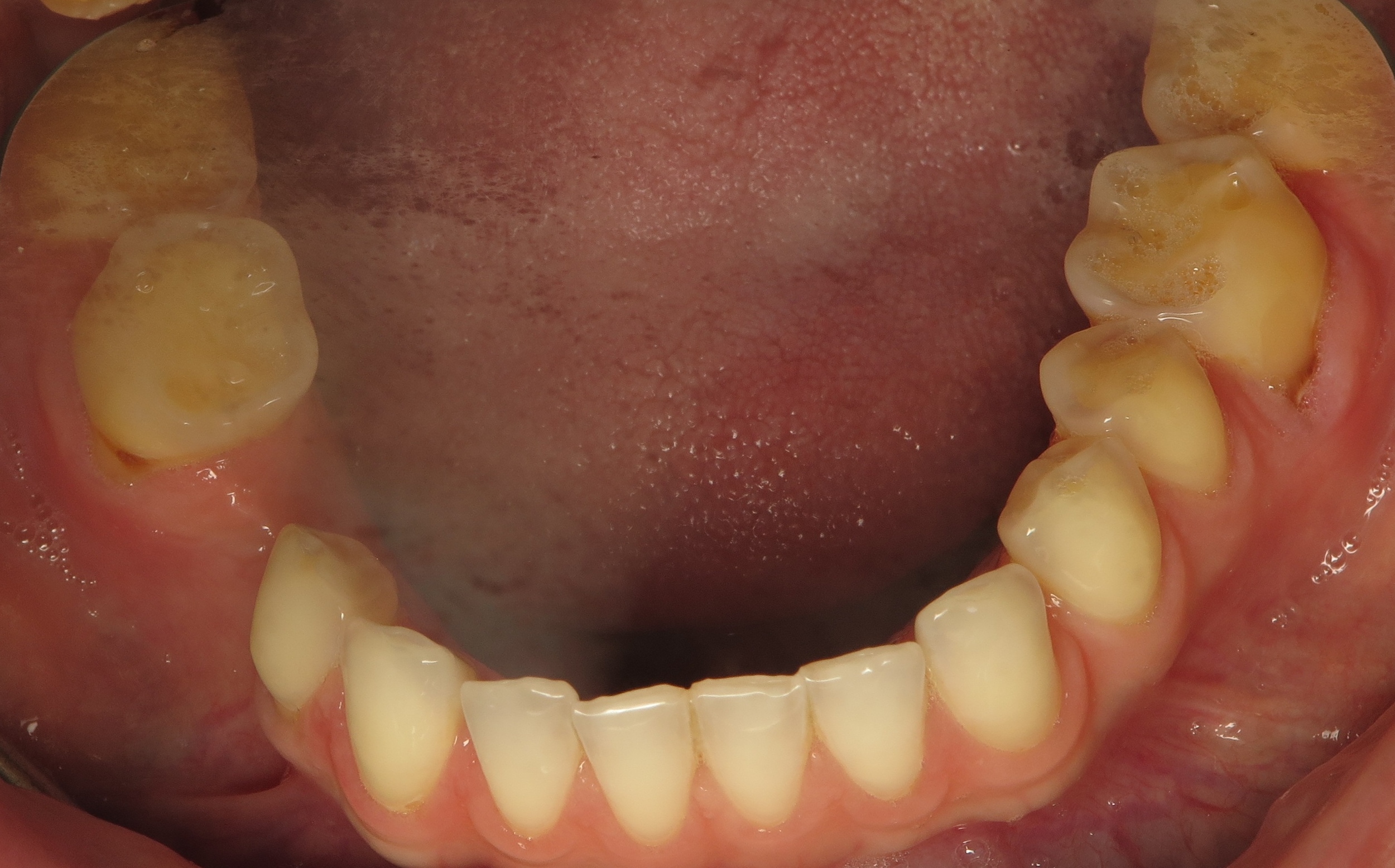
 Here, the patient needed their lower arch of teeth rebuilt from years of acid wear. When approaching a case like this, we have to be mindful of both esthetics and function. Close cooperation between our office and the dental lab assures that we deliver a final product that both looks great and respects the patient's jaw and chewing function. 

Pretreatment photograph

Pretreatment photograph

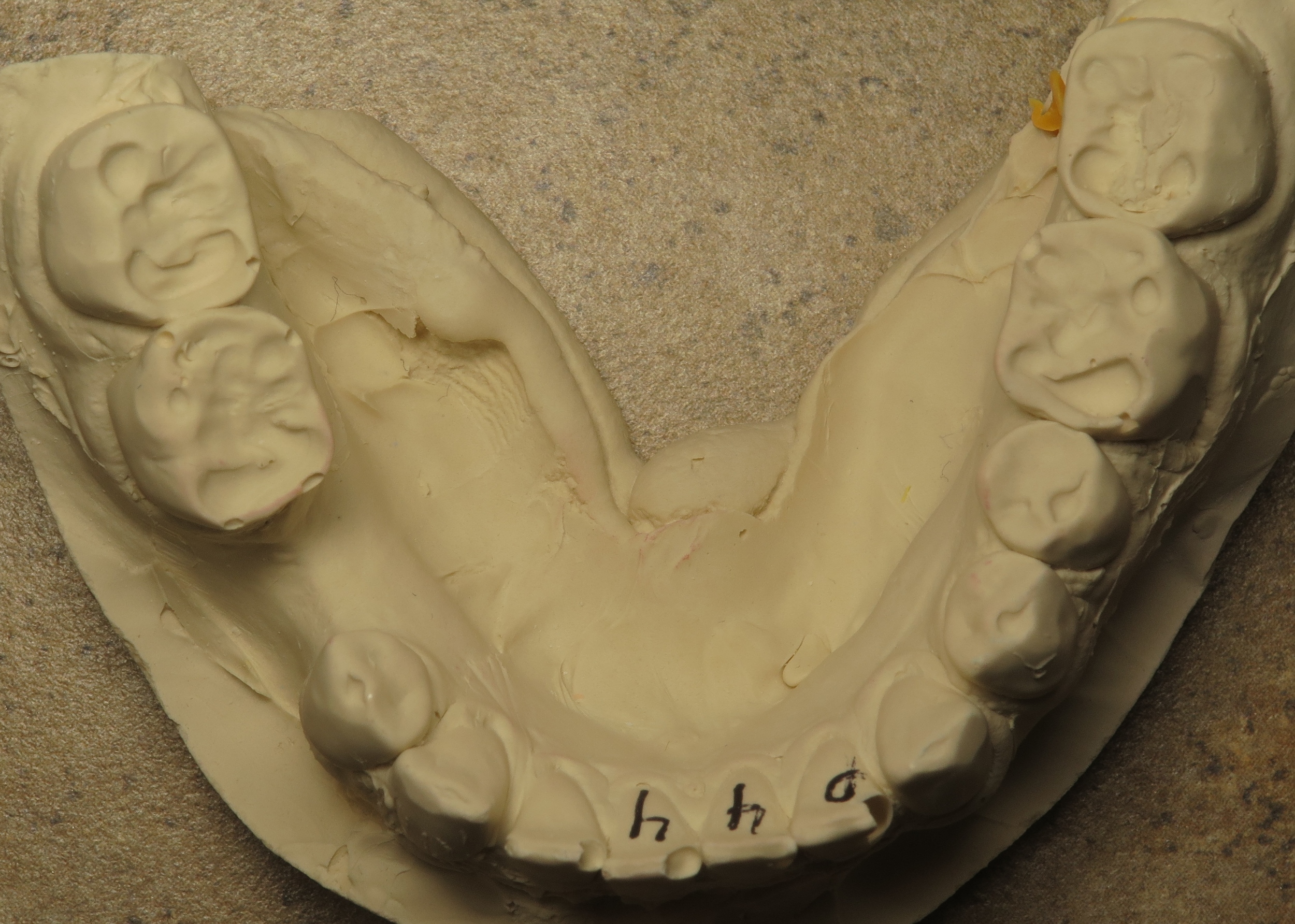
Stone modelwork of the patient before treatment

Stone modelwork of the patient before treatment

Here, we see the patient's pretreatment condition.  In order to best treatment plan for esthetics and function, stone models of their teeth were sent to our dental lab. The lab used wax on the models to mimic an ideal outcome. We were then able to show the patient what to expect when we treat the teeth. This waxed up model is also used to make temporary acrylic crowns, which hold space while the patient awaits the final crowns. 


Initial waxup of patient’s left side

Initial waxup of patient’s left side

Initial waxup of patient’s right side

Initial waxup of patient’s right side

After reviewing the wax models with the patient, we decided to do a combination of minimal preparation composite onlay crowns and lithium disilicate full coverage crowns.  Also, note the gap on the photo left (patient's right). Here, we added a bridge to replace the missing second premolar. After the teeth were readied for crowns, we sent impressions, previously waxed ideal models, pictures and instructions to our dental lab.

Picture of the patient’s teeth, after being prepared for final crowns

Picture of the patient’s teeth, after being prepared for final crowns

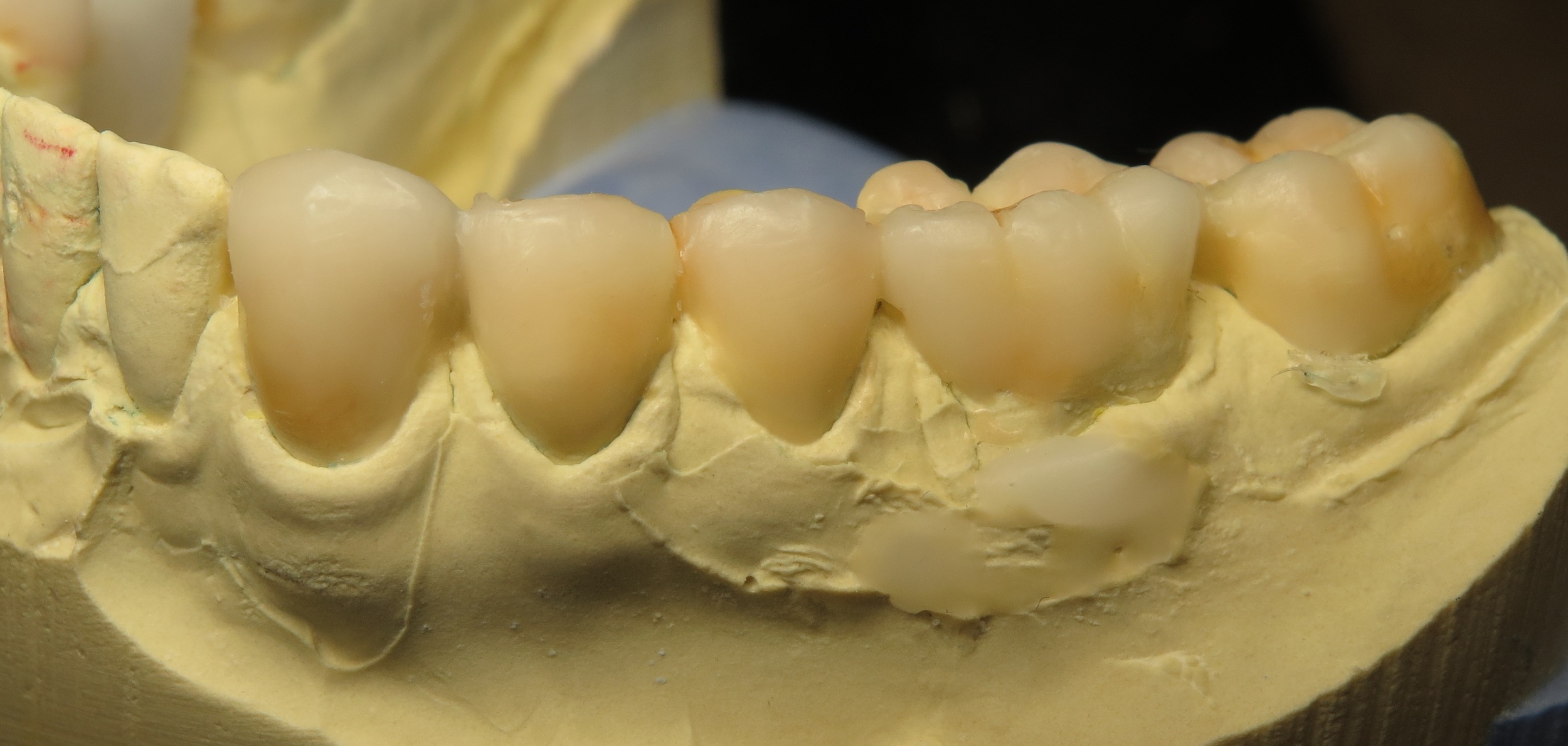
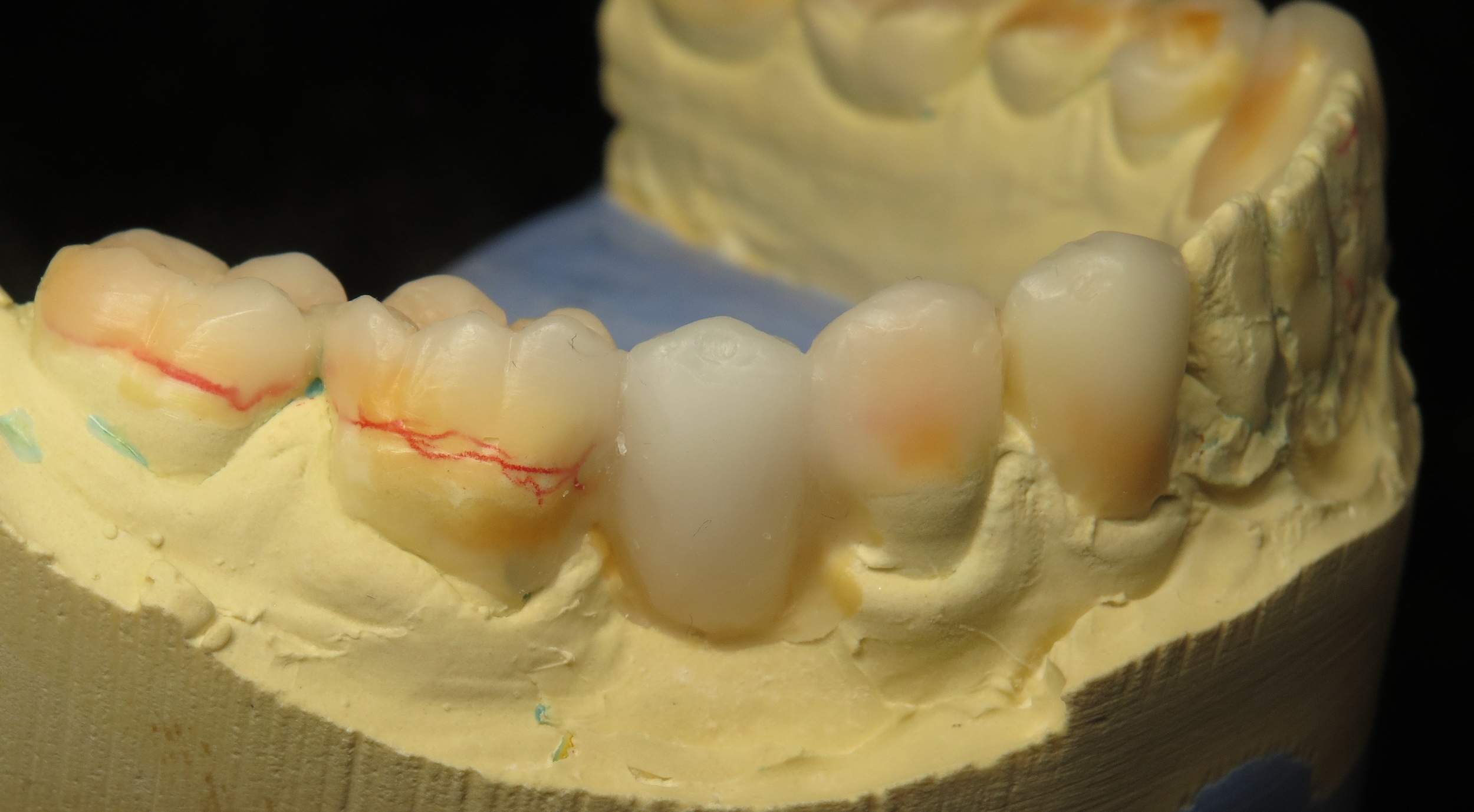
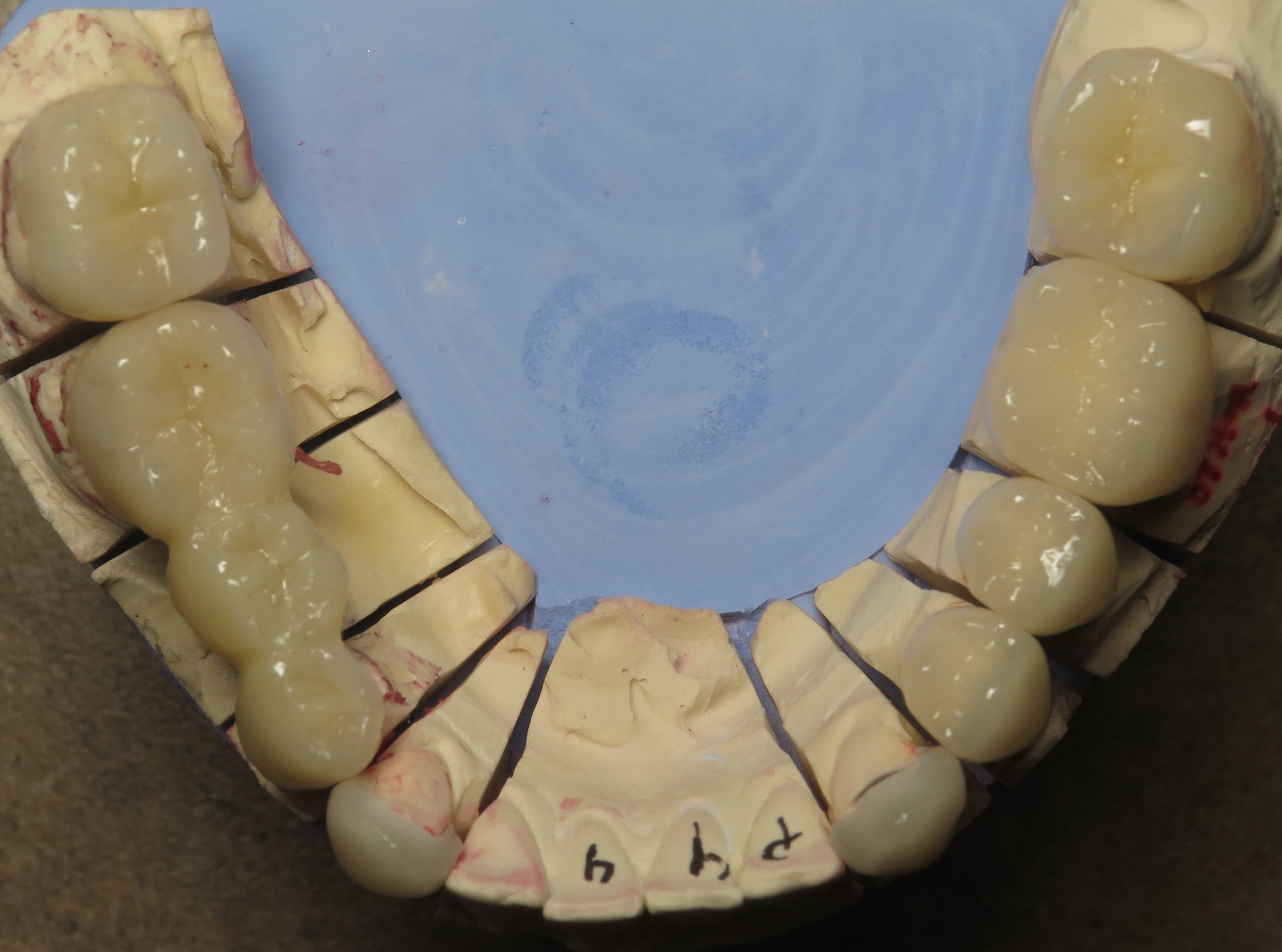
Our lab then took all of this information and fabricated crowns for the prepared teeth. This process took two weeks. Special attention was paid in matching color, texture, tooth bulk and biting function to the patient's needs. 

The final crowns on a stone model

The final crowns on a stone model

The crowns were then sent back to our office, where we checked them for color, fit and size. Once we determined the crowns were a perfect fit for the patient, we permanently adhered them with crown cement.


Results

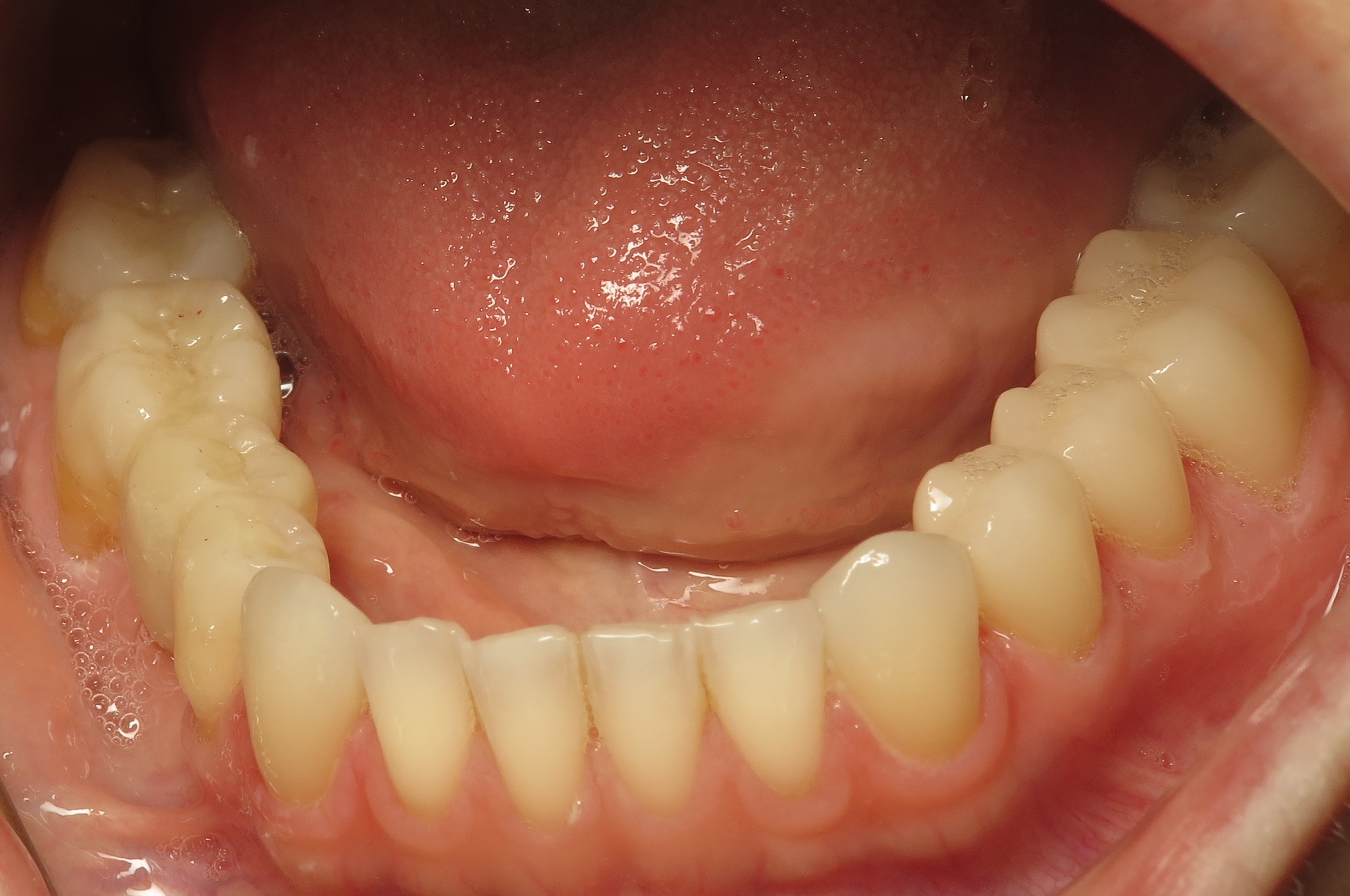
Overall final product

Overall final product

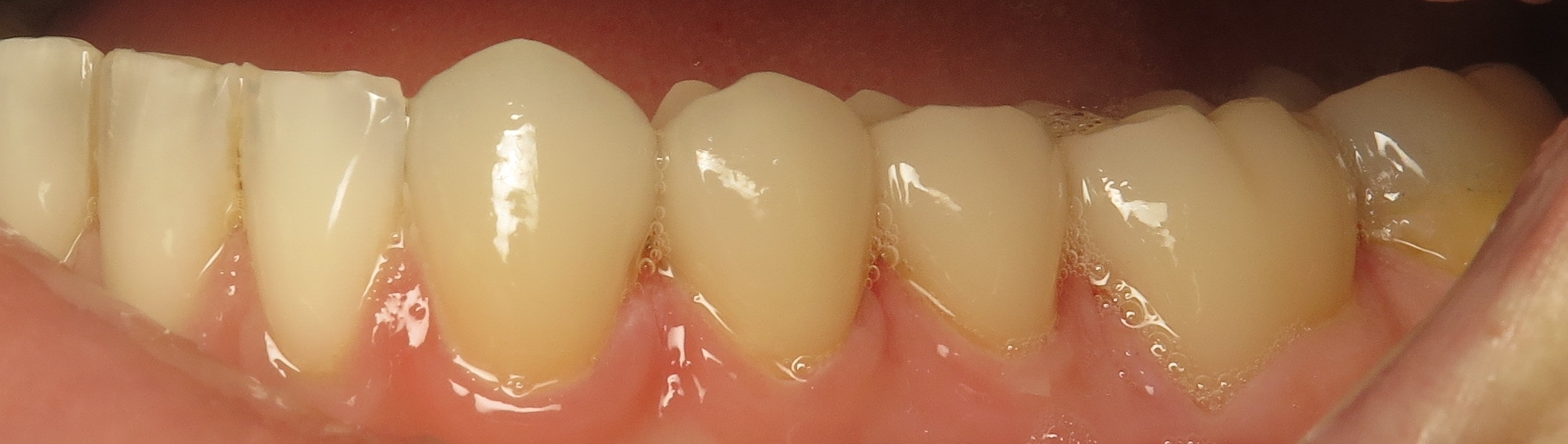
Closeup of patient’s right side

Closeup of patient’s right side

Closeup of patient’s left side

Closeup of patient’s left side

The finished product!  Not only did we restore the cosmetics of the patient's lower teeth, but we added back functionality and tooth structure. Both our office and the patient are ecstatic with the results!

As mentioned before, this patient represents a small portion of the services offered at our office. Every day, we treat a wide spectrum of dental problems, from fillings and cleaning to implants and full mouth veneers. If you would like to know more about the types of cases we treat and what they involve, please give us a call. We are always ready to meet all of our patient's dental needs!

Comment