Case Presentation: Invisalign Transformation

Comment

Case Presentation: Invisalign Transformation

thousandoaksfamilydentistry.com

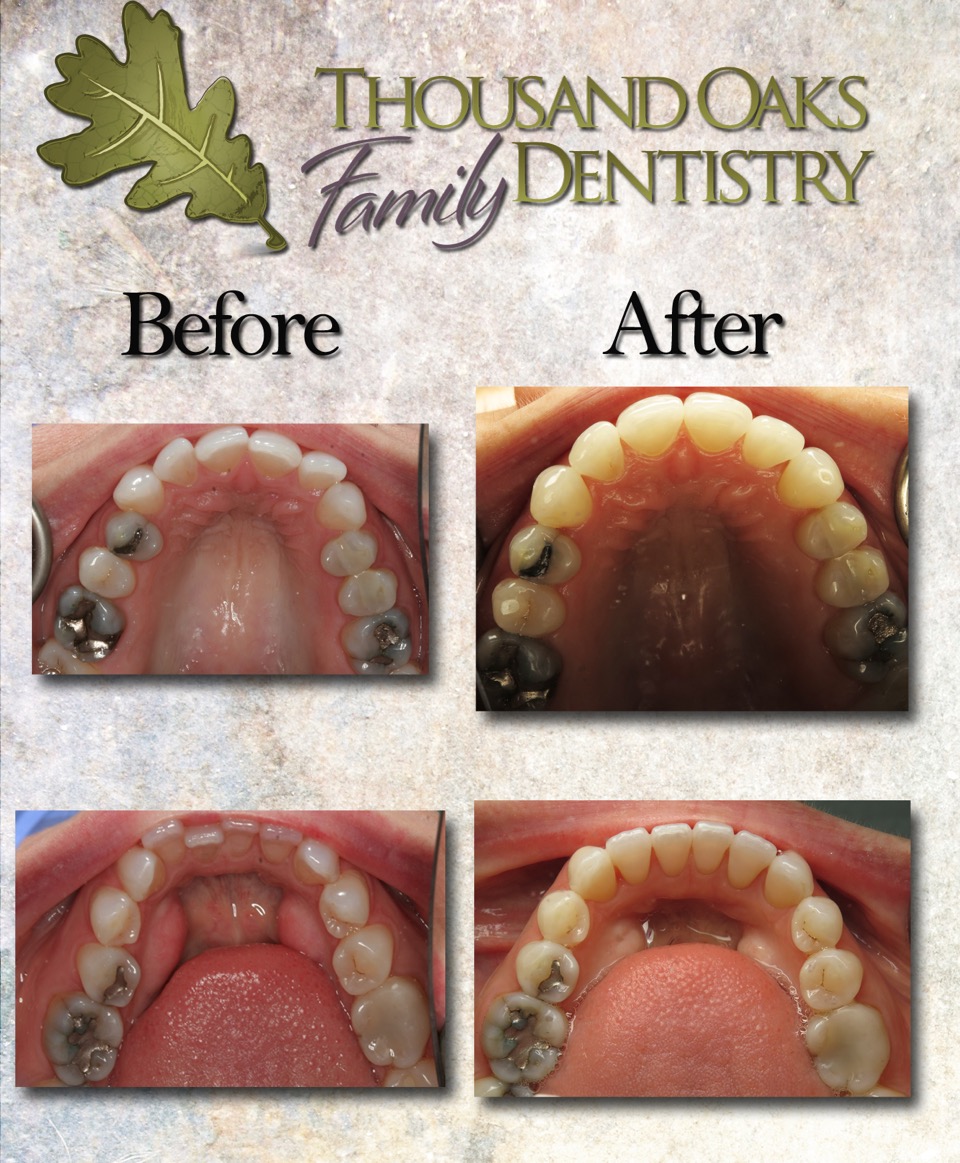
Check out this great orthodontic treatment that we just finished! Today's patient came to us with some mild crowding and misplacement of their top and bottom teeth. After an exam and consultation, we determined that their orthodontic concerns could be addressed using Invisalign clear braces. Through a series of special trays and "buttons" (small attachments made from filling material that allow the trays to grip the teeth),  we perfected this patient's smile without any visible braces. This is only one of the many great Invisalign transformations done at our office. If you would like to know more about Invisalign, who is eligible or how the process works, please give us a call!


Comment

Case Presentation: Premolar Implant

Comment

Case Presentation: Premolar Implant

Every day, our office sees patients with a wide variety of restorative needs, each of which we try to match on an individual basis. Today's patient came to us with decay in their second premolar that structurally compromised the tooth. Radiographs revealed that there was not enough healthy enamel/dentin left to do a traditional filling or crown, so we had to consider other treatment possibilities. After reviewing options with the patient, it was decided that the tooth should be extracted and replaced with an implant by one of our specialists. 

Take a look at how the decayed (darker appearing) tooth was removed and replaced with a titanium implant. 

Take a look at how the decayed (darker appearing) tooth was removed and replaced with a titanium implant. 

After the implant was placed and healed, we took impressions to make a custom mounting for the final crown (called an abutment). Since the second premolar is far back in the mouth, we had our lab create a gold abutment matched to a porcelain and metal crown. This combination of materials allowed us to create a crown that was both durable and beautiful without risking damage to the opposing teeth. The patient gets all the structural benefits of a metal crown, but with no metal showing. Careful planning provided us with great results; both our office and the patient were ecstatic with the outcome!

The final product! Notice how natural the implant crown looks in the patient's mouth. 

The final product! Notice how natural the implant crown looks in the patient's mouth. 

Overall, dental implant cases typically take about 8 months from start to finish. The vast majority of this time is spent making sure the implant is healed correctly and properly integrated into bone. In the meantime, there are numerous other considerations and adjustments needed: the appearance of the surrounding gum tissue, the color/shade of the crown and even the shape/material of the underlying abutment. If you are interested in an having a dental implant placed or are just curious about what goes into making an implant, please feel free to call our office! We are always happy to walk you through any of our procedures!

Comment

Happy Father's Day!

Comment

Happy Father's Day!

At Thousand Oaks Family Dentistry, we hope everyone gets to spend today with their beloved fathers and/or children. As a special treat, here is our office manager Michael and his son Jonathan. Michael celebrates his very fist Father's Day today! Enjoy the warm weather, fire up the grill and spend some quality time with your family!

Comment

Welcome Faith!

Comment

Welcome Faith!

ThousandOaksFamilyDentistry.com

Thousand Oaks Family Dentistry is proud to welcome Faith, our newest dental assistant! Faith was born in Detroit, Michigan and attended the University of Hawaii in Maui where she pursued a degree in nursing. A change of careers brought her to Southern California, where she is eager to expand and share her dental knowledge while helping others. In her off time, Faith enjoys spending time with her two daughters, hiking, cooking and running. We are glad to have you with us, Faith!

Comment

Office CPR Licensure

Comment

Office CPR Licensure

thousandoaksfamilydentisty.com

This month, Thousand Oaks Family Dentistry completed our two-year CPR training course. All clinical staff are required to learn two-person resuscitation methods (in addition to standard CPR) as part of our licensure and operational requirements. Even under the most cautious guidelines, medical emergencies can arise in a dental office. These training sessions help us recognize and manage crises as they happen. For your own knowledge, here are some of the American Heart Association’s most up-to-date recommendations on CPR methods:

  • The familiar “ABC’s” of CPR have recently (as of 2010) switched to “CAB.” This means starting with compressions, then checking airways and finally providing artificial breathing.
  • Chest compressions should depress the chest about two inches, at a pace of 100 compressions/minute.
  • After about 30 compressions, check the airway using a head-tilt/chin-lift maneuver.
  • If the individual is still not breathing, provide two rescue breaths, while watching to make sure their chest is rising (signifying the lungs are filling).
  • If available, an AED can be critical in restoring normal cardiac function.
  • If you are untrained in CPR, just provide compressions (100 compressions/minute, two inch depressions) until paramedics arrive
  • Always remember to have someone call 911. This critical step can be easily overlooked in emergency situations.
  • For more in-depth instructions, take a look at this great article put out by the Mayo Clinic

Comment

Dental Questions: What do I do if I lose a temporary crown

Comment

Dental Questions: What do I do if I lose a temporary crown

Temporary crowns are not as developed or strong as permanent crowns because they are only intended to function for about two weeks. 

Temporary crowns are not as developed or strong as permanent crowns because they are only intended to function for about two weeks. 

Fortunately, losing a temporary crown is not a dental emergency. We primarily use them as space holders until the permanent restorations are ready. Even in the span of 2 weeks, the adjacent teeth can start to shift into the area created during the crown preparation. A temporary crown maintains space for the permanent crown, along with providing some chewing function and protection for the underlying tooth. If you lose a temporary crown, call our office and we will see you as soon as possible (typically the same afternoon/ following day). Remaking or recementing a temporary crown only takes about 20 minutes and usually does not require any anesthetic. Do not try to recement the crown on your own using drug store temporary dental cements. These products come with a number of risks, including permanently lodging the crown to the tooth or irritating the gums and periodontal space. Your teeth will not move significantly in the one to two days between losing your crown and having it replaced at our office. 

Comment

Dental Questions: Are water flossers a good substitute for dental floss?

Comment

Dental Questions: Are water flossers a good substitute for dental floss?

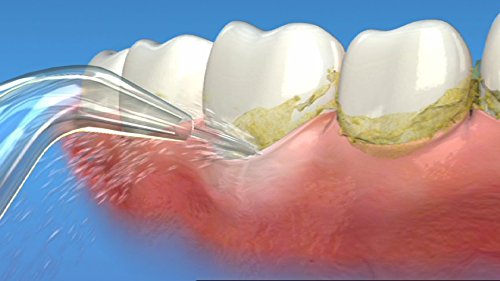
Water flossers (commonly known as “Waterpiks,” though that is a name brand) are typically marketed as being a convenient replacement for traditional dental floss. However, they can’t remove plaque and bacteria as thoroughly or completely as threaded floss. Overall, no product rivals the benefits of getting a physical object between the teeth and mechanically removing buildup. Still, a water flosser can be a great addition to your existing home care regimen. They are particularly good at removing packed-in food that your toothbrush can’t dislodge. Patients with gum disease will typically see the most benefit from a water flosser. The lowered height of gingival tissue allows the water to more effectively penetrate the periodontal space and remove debris.

Comment

Dental Questions What Causes Bad Breath

Comment

Dental Questions What Causes Bad Breath

thousandoaksfamilydentisty.com

Its annoying, embarrassing and tough to avoid: many patients struggle with bad breath on a daily basis. But what causes it? Sometimes, the source is obvious- such as a flavorful meal. However, chronic bad breath can usually be traced to a weakness in your home dental hygiene regimen. Flossing daily is an excellent way to combat odorous breath, as the bacteria in your gums produce a number of foul smelling by-products. Using floss will prevent colonies from spreading, improve your gum health and keep your breath fresh. The tongue may also serve as a source of bad breath, and can be brushed daily to remove bacteria. In some cases, bad breath (particularly in the morning) can be linked to post nasal drip or gastric reflux. In both these cases, solving the underlying problem will eliminate the bad breath.


You have probably tried mouthwashes, mints, gum and even some “miracle cures” found online. Unfortunately, these aren’t permanent solutions. All these products work akin to air fresheners: they remove the smell, not the problem. If you want a lasting solution to your bad breath, make sure you are using well rounded home care. If the problem persists, do not hesitate to schedule a consultation with our office!

Comment

Dental Questions: What is a “Same Day” Crown? How Does It Work?

Comment

Dental Questions: What is a “Same Day” Crown? How Does It Work?

Same day crowns are typically made by scanning the patient's tooth, designing a crown and milling it out of a ceramic/zirconia block.

Same day crowns are typically made by scanning the patient's tooth, designing a crown and milling it out of a ceramic/zirconia block.

    You may have seen advertisements for dental offices offering “same day” or “same visit” crowns. These services rely on a common engineering technology called CAD/CAM (computer automated design/ computer automated milling). During this procedure, your impression is taken digitally with a 3D scanner and uploaded to a special software that designs crowns. The dentist then finalizes the crown and sends it to a milling machine. After about an hour, the completed permanent restoration is ready to be finished and delivered to the patient. 

    On paper, this treatment sounds great and you may be wondering why we don’t offer it at our office. The reality is that these same-day crown systems have some serious drawbacks that we do not want to extend to our patients. For starters, an in-office milled crown is only as good as the time invested in it. Theoretically, we could scan your tooth, use a “generic” design, mill and deliver your crown in about 45 minutes. However, for these restorations to look and function properly, they need to be digitally adjusted, glazed and sintered in an oven. When done correctly, this process can take up to 2 hours; time you may not have to wait around! We much prefer utilizing the expertise of our local dental labs. Think of it this way: can a product produced in 45 minutes by a dental office really rival something that takes a master ceramist days to complete? 

    Furthermore, the typical two week turnaround for a dental crown may seem like an inconvenience, but it actually serves a functional purpose. The unfortunate truth is that any time a dentist works on a tooth there is a (typically small) chance the nerve will become irritated and need a root canal. In the two weeks between preparing a tooth and cementing the crown, patients can usually tell if something is wrong with the nerve. Hence, we can provide a root canal before putting on the permanent crown. This can save a lot of headache in the future, particularly with the new, extremely hard zirconia crowns available. 

    Finally, using a CAD/CAM system severely limits the crown material choices available. There are no “one size fits all” dental materials (and anyone who tries to convince you otherwise is pulling your leg!). At our office, we treat each patient holistically and try to provide the best restorations for every tooth in its unique situation. There are a number of materials that these machines can’t use or can’t use well. With these milling units costing upwards of $100,000, many offices feel obligated or “locked-in” to providing CAD/CAM crowns, even when they are not the best option available. 

    As the technology currently stands, we are not comfortable offering in-office milled crowns to our patients. Our office feels that we get better results using a traditional dental lab to make our restorations. If you have any further questions or concerns on our crowns, how they are made or the materials we use, please give us a call!

Comment

Dental Questions: Can Any Tooth Be Replaced With An Implant?

Comment

Dental Questions: Can Any Tooth Be Replaced With An Implant?

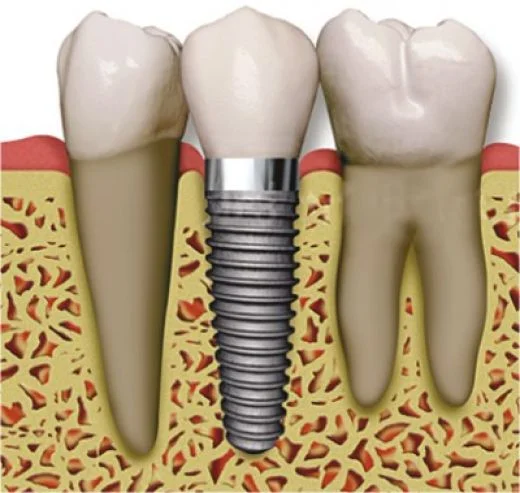
Here, you can visualize how important bone space is in placing an implant. 

Here, you can visualize how important bone space is in placing an implant. 

In theory, an implant could take the place of any tooth position in the mouth under ideal conditions. However, not every tooth will be a good candidate for replacement with an implant. The main limiting factors are space, bone size and bone health. For an implant to function properly, there needs to be enough distance between the adjacent teeth so that it can be placed without damaging the roots (which would necessitate both the implant and the tooth to be removed). Additionally, there needs to be ample bone height for the implant to sit in and integrate. This becomes a particular problem on the upper jaw, where the maxillary sinuses can encroach on potential bone space. Finally, the bone needs to be completely healthy. Patients with bone density disorders, recent infection or a history of taking certain medications may not be eligible for an implant. 

While we can accommodate a number of conditions with special implant shapes and grafting, there are some instances where placing an implant would be unpredictable or dangerous. In any case, a proper examination (with x-rays) is the only way to determine if you are eligible for a dental implant. If you would like to know more about implants, when we can place them and if you are eligible, please call our office!

Comment